
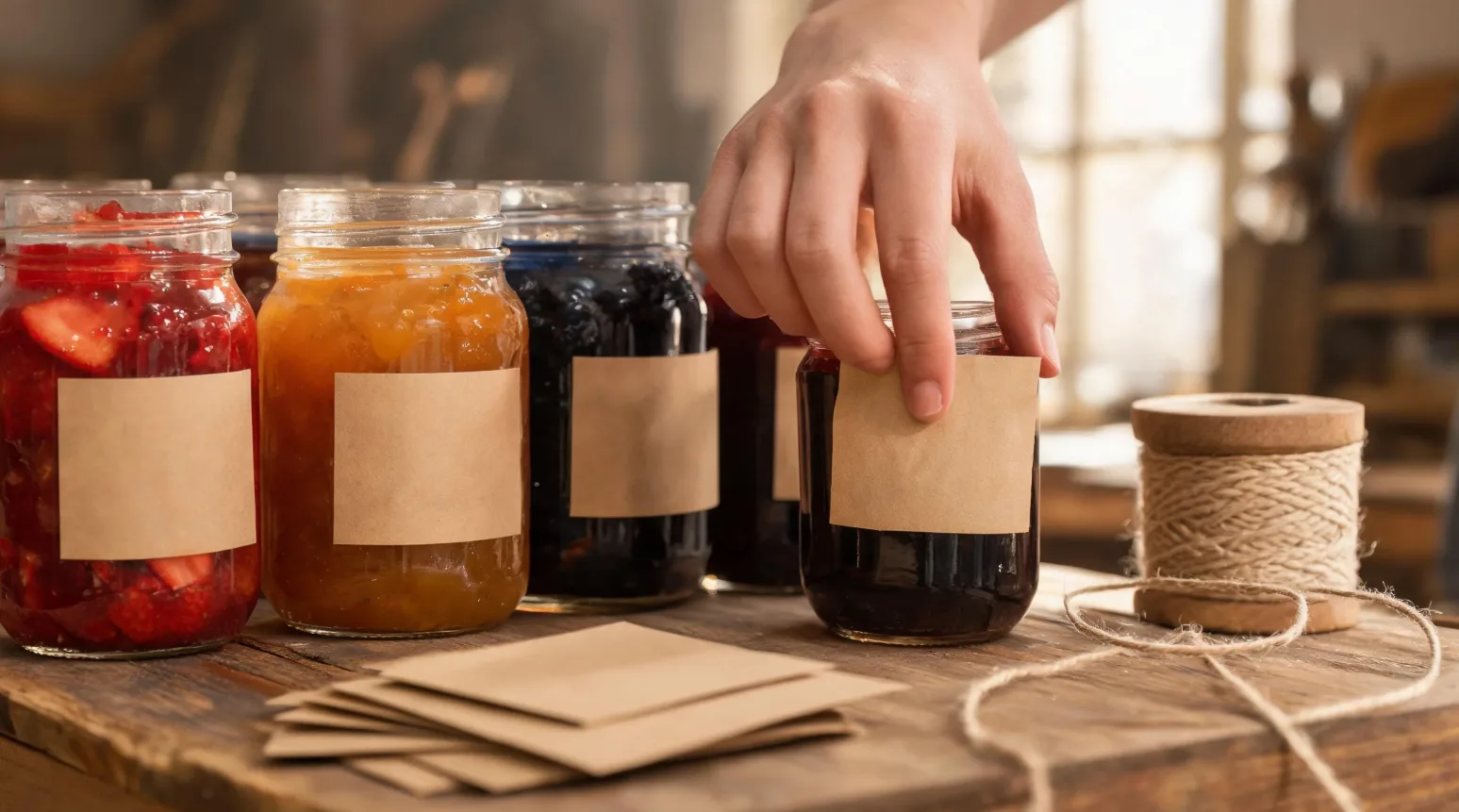
A good product label sticker survives whatever its container goes through — condensation on a bottle, oil on a candle jar, or a freezer shelf — while still looking sharp. For small-batch makers, choosing the right material and shape matters more than most people expect. Here’s how to pick labels by container type and avoid the common mistakes.
What makes a good product label sticker?
Three things: a material that suits the environment, an adhesive that grips the container surface, and a shape that fits the curve. Paper labels look lovely on dry goods but fail on anything damp. Waterproof and oil-resistant vinyl handles kitchens, bathrooms, and fridges. Custom die-cut shapes let you match a slim bottle or a wide jar lid exactly instead of forcing a rectangle onto a curve.
Choosing labels by container type
| Container | Recommended material | Shape tip | Durability note |
|---|---|---|---|
| Glass jar (jams, candles) | Waterproof vinyl | Wide rectangle or oval; round lid label | Resists condensation and wax residue |
| Plastic bottle (drinks, oils) | Waterproof, oil-resistant vinyl | Tall, narrow; wrap-around | Survives fridge damp and hand oils |
| Stand-up pouch | Flexible vinyl or matte film | Front panel; avoid the seal edge | Must flex without cracking |
| Tin (balms, teas) | Vinyl with strong adhesive | Circular lid label | Metal needs a firmer grip |
| Cosmetic tube | Thin conformable vinyl | Narrow wrap; rounded corners | Squeezing must not lift edges |
Waterproof and oil-resistant considerations
If your product lives near water, oil, or cold, uncoated paper is not an option — it wicks moisture, stains, and peels. Waterproof vinyl with a laminate stays legible through fridges, freezers, and spills. Oil-resistant stock matters for candles, balms, and cooking oils, where a paper label darkens within weeks. Our waterproof stickers guide explains the material differences.
Shape and placement tips
- Round the corners: sharp corners lift first, especially on curves.
- Keep labels within the flattest part of the container; avoid crossing a seam.
- On tall bottles, a narrow vertical label reads better than a squeezed horizontal one.
- Leave a small margin from the base so the label doesn’t sit in a puddle.
- Use a custom die-cut shape rather than trimming a rectangle by hand.
Common labeling mistakes small businesses make
- Choosing paper because it looks “artisan,” then losing it to the first spill.
- Ordering one giant batch before testing the shape on the actual container.
- Ignoring the curve: a flat rectangle on a round jar creates wrinkles.
- Forgetting legal or ingredient text and having to reprint.
- Applying to a dusty or oily surface, so edges lift within days.
If your labels double as branding on the outer box, see custom stickers for packaging. To compare base materials, read vinyl vs paper stickers.
Frequently asked questions
What are the best sticker labels for homemade products?
Waterproof vinyl with a laminate — it handles moisture, oil, and handling far better than paper.
Are there waterproof labels for jars and bottles?
Yes. Waterproof, oil-resistant vinyl is the standard for jars, bottles, and anything refrigerated.
Can I get custom label shapes?
Yes — custom die-cut shapes let you fit curved bottles, round lids, and pouches exactly.
Is there a minimum order for small businesses?
We keep MOVs small so you can test a design before committing to a large run.
Will labels survive the freezer?
Laminated waterproof vinyl with a suitable adhesive does; paper labels do not.
Design custom product labels that survive fridges, freezers, and spills.