
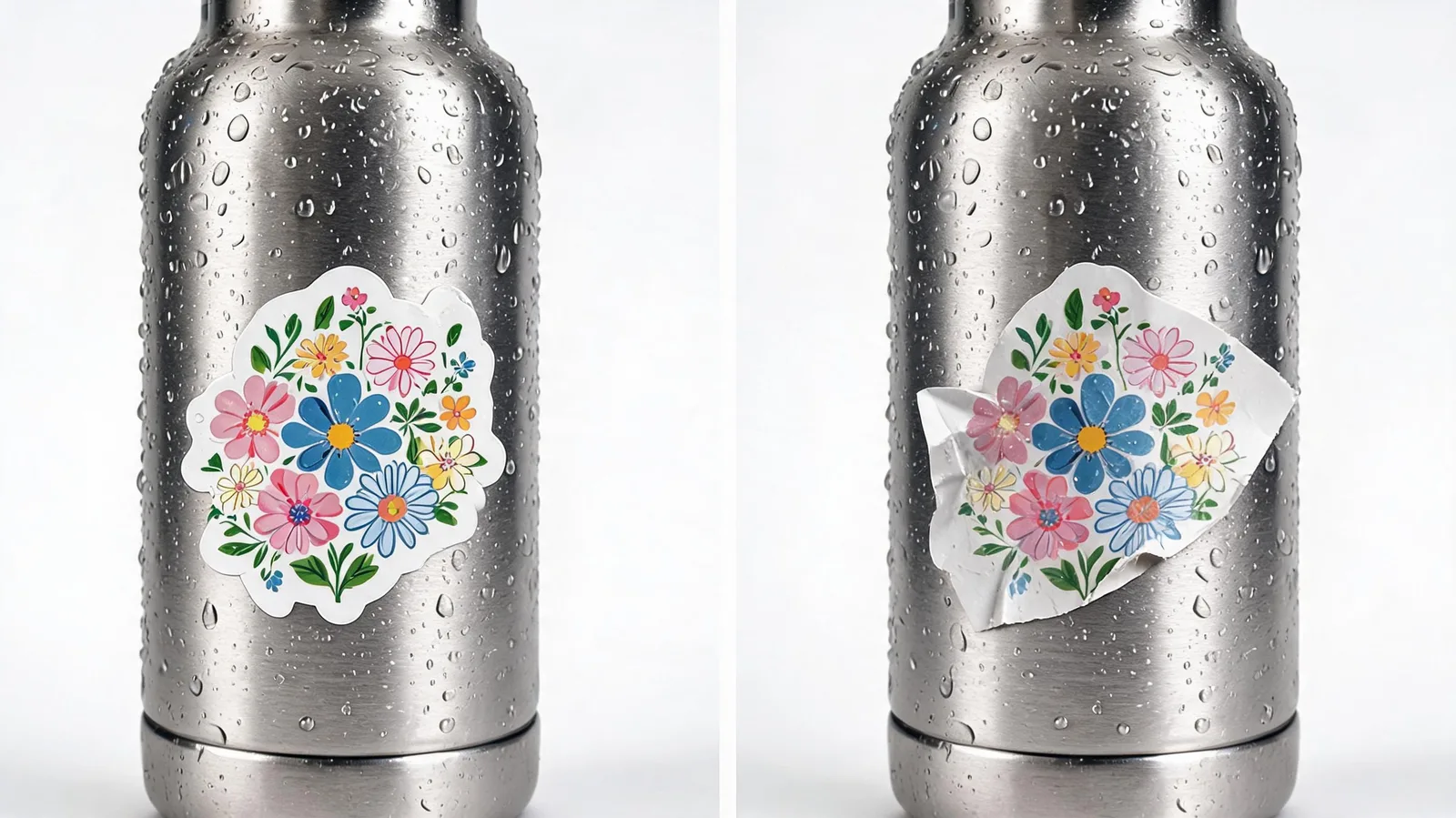
The material you pick decides whether your sticker survives a dishwasher and a year of sunlight — or peels and fades in a few weeks. Here’s how the five most common sticker materials compare, and when each one is the right call.
| Material | Durability | Waterproof | Indoor / Outdoor | Cost | Best for |
|---|---|---|---|---|---|
| Vinyl | 3–5 yrs | Yes | Both | $$ | Bottles, laptops, outdoor decals |
| Paper | Months | No | Indoor | $ | Indoor labels, inserts, planners |
| BOPP | 2–4 yrs | Yes | Both | $$ | Product labels, cosmetics, food |
| Clear vinyl | 3–5 yrs | Yes | Both | $$ | Windows, “no-label” look |
| Holographic | 3–5 yrs | Yes | Both | $$$ | Premium, retail, fashion |
At StickerJaki, vinyl, clear, BOPP, and holographic options all ship with UV-resistant lamination so colors stay vivid and the surface resists scratches and water.
How long do vinyl stickers last?
A laminated vinyl sticker lasts 3–5 years outdoors and effectively indefinitely indoors. Vinyl is flexible, waterproof, and UV-resistant, so it survives sunlight, rain, washing, and daily handling without cracking or fading. That’s why it’s the default for water bottles, laptops, cars, and any product that gets touched or goes outside.
When should you use paper stickers?
Paper stickers are the budget choice for indoor, short-life uses: address labels, packaging inserts, event name tags, planner stickers, and promotional handouts. They take print beautifully and cost less, but they aren’t waterproof and degrade with moisture and friction. If a sticker will ever get wet or live outdoors, skip paper.
What is BOPP and why do brands love it?
BOPP (biaxially-oriented polypropylene) is a thin, waterproof, tear-resistant film that’s become the go-to for product labels — especially cosmetics, food, and beverages. It’s slightly cheaper than premium vinyl, prints with sharp color, and resists oils and moisture, making it ideal for labels that need to look clean on a shelf and survive a fridge or bathroom shelf.
The hidden cost of cheap materials
Saving a few cents on paper when you needed vinyl is a false economy. Stickers that peel, fade, or smudge damage your brand at the exact moment a customer is holding your product. For anything customer-facing or outdoor, the small material upgrade to vinyl or BOPP pays for itself in perceived quality and longevity. Not sure which to pick? Compare options in our sticker materials guide or feel them in person with a sample pack.
Frequently asked questions
How long do vinyl stickers last outdoors?
Laminated vinyl stickers last 3–5 years outdoors, resisting sun, rain, and washing. Indoors they last effectively indefinitely.
Are paper stickers waterproof?
No. Paper stickers are not waterproof and are best for indoor, short-term uses like labels, inserts, and planners.
What is the most durable sticker material?
Vinyl (including clear and holographic vinyl) is the most durable for general use — waterproof, UV-resistant, and good for 3–5 years outdoors. BOPP is a close, label-focused alternative.
Which material is best for product labels?
BOPP is the most popular for product labels because it’s waterproof, oil-resistant, and prints with sharp color at a reasonable cost. Vinyl is also excellent.
Can paper stickers be used outdoors?
Not recommended. Without waterproofing they degrade quickly outdoors. Use vinyl or BOPP for any outdoor application.
Feel the difference
Order a free material sample pack to compare vinyl, clear, BOPP, and holographic in person before you commit. Message us on WhatsApp or email contact@stickerjaki.com, or start a custom order.
Buyer Notes for Vinyl Sticker vs Paper Sticker: Which Material Lasts Longer? (2026 Guide)
For sticker sourcing, buyers should consider product format, finish, carton quantity, packaging style, and whether the design fits the intended retail or promotional use. StickerJaki focuses on carton-based wholesale supply, with standard product orders following MOV $200. Custom sticker pricing depends on the product type, material, finish, packaging, and quantity.
Sticker products can look similar online, but commercial results often depend on details such as adhesive choice, finish, packaging, sheet layout, and carton quantity. Buyers should match those specifications to the selling channel before choosing a product.
Quick sourcing checklist
- Define where and how the sticker will be used
- Compare material, finish, packaging, and carton quantity
- Use custom quoting when standard products do not match the project
For readers comparing options, the best next step is to move from general research to the right product or quote path. Useful resources: Wholesale sticker products · 3D relief stickers wholesale · Custom sticker manufacturing.
If the standard product range does not match the exact design, packaging, or application requirement, a custom quote is usually the better path. In that case, prepare the artwork, expected quantity, target material, finish, and packing method before contacting the supplier.
Commercial Planning Notes
Most sticker decisions become easier when buyers separate appearance from function. Appearance covers artwork style, finish, color, shape, and packaging impression. Function covers adhesive, surface compatibility, durability, carton quantity, and how the product will be handled after delivery. Both sides matter for a successful commercial sticker order.
Before placing a wholesale order, buyers should confirm the selling unit, carton quantity, product dimensions, material expectations, and whether a standard product or custom quote is the right path. This keeps the purchase aligned with retail display, online fulfillment, promotional use, or brand packaging needs.
For buyers comparing multiple sticker formats, the practical next step is to shortlist the intended use first, then match the product format to that use. Standard wholesale items are generally best for fast sourcing and retail assortments, while custom production is better when the design, material, dimensions, or packaging must follow a specific brand requirement.


