The simplest difference: a temporary tattoo transfers ink onto skin and fades naturally, while a sticker adheres to an object and peels off. Both are popular custom promo items, but they solve different jobs. Here’s the comparison, the safety question, and when each wins.
How are temporary tattoos different from stickers?
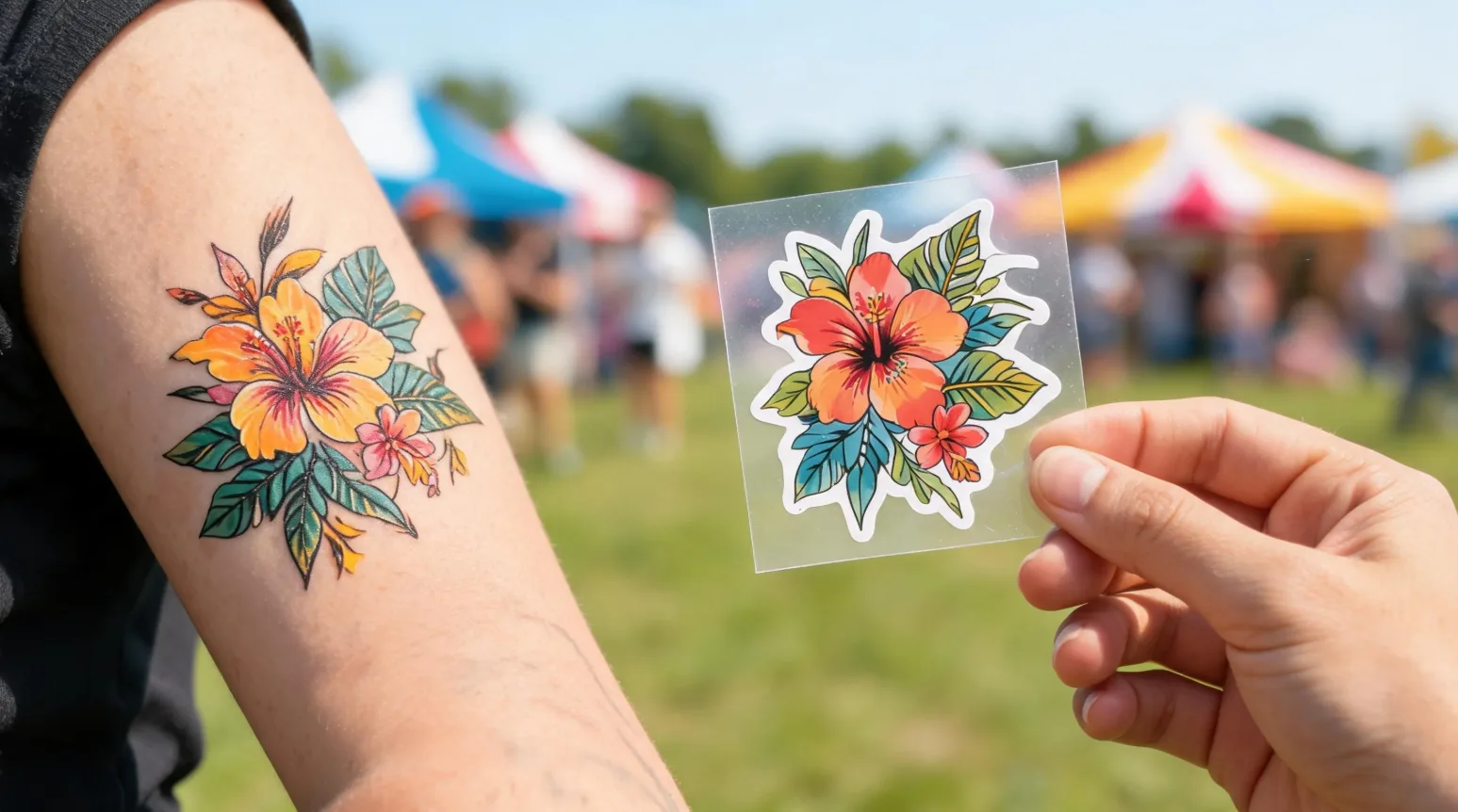
A temporary tattoo is a printed design on a transfer sheet. Press it to skin, wet the backing, and the ink releases onto the skin. A sticker has adhesive on the back and sits on a surface. Tattoos flex with skin and wear off; stickers stay put until you peel them.
| Temporary tattoo | Sticker | |
|---|---|---|
| Surface | Skin | Objects and surfaces |
| Durability | 2-5 days, fades gradually | Months to years |
| Application | Press, wet, peel backing | Peel and stick |
| Safety | Skin-safe inks required | Not for skin |
| Best use case | Events, parties, kids, promo | Products, packaging, laptops, cars |
Are temporary tattoos skin-safe?
Quality temporary tattoos use skin-safe, cosmetic-grade inks and adhesives designed for direct skin contact. Ask your supplier which standards their inks meet, and always patch-test on sensitive skin. Avoid so-called “black henna” products, which are a different category entirely. For children, choose a skin-safe temporary tattoo option and supervise application.
Best uses for temporary tattoos (events, parties, promo)
- Festivals and sports events: team logos and face designs fans wear all day.
- Kids’ parties: a low-mess alternative to face paint.
- Brand activations: walking advertising at conferences and pop-ups.
- Fundraisers and campaigns: a cheap, memorable giveaway.
If your event needs branding on surfaces rather than skin, our custom stickers for events guide covers that side.
How long do they last and how to remove them
Applied to clean, oil-free skin, a temporary tattoo typically lasts two to five days, fading as skin naturally exfoliates. Water and friction shorten this. To remove one early, rub the area with baby oil, rubbing alcohol, or an oil-based cleanser and gently wipe. Avoid scrubbing hard.
When to choose a sticker instead
Choose a sticker whenever the design belongs on an object: packaging, laptops, water bottles, cars, or windows. Stickers last far longer, survive weather, and can be die-cut into any shape. Tattoos are for the moment; stickers are for the long haul. Many brands order both — tattoos as the giveaway, stickers as the take-home. For craft and kids’ use, see stickers for kids’ crafts.
Frequently asked questions
Are temporary tattoos safe for skin?
Quality ones use skin-safe, cosmetic-grade inks. Patch-test on sensitive skin and supervise children.
How long do temporary tattoos last?
Typically two to five days, depending on skin, water exposure, and friction.
Can I get custom temporary tattoos for events?
Yes — custom designs are available in event and promotional quantities.
How do I remove a temporary tattoo?
Rub with baby oil, rubbing alcohol, or an oil-based cleanser and wipe gently.
Can stickers be used on skin?
No. Regular sticker adhesive is not formulated for skin — use a temporary tattoo instead.
Explore custom temporary tattoos for your next event or promotion.
Buyer Notes for Temporary Tattoos vs Stickers: What's the Difference and When to Use Each
For sticker sourcing, buyers should consider product format, finish, carton quantity, packaging style, and whether the design fits the intended retail or promotional use. StickerJaki focuses on carton-based wholesale supply, with standard product orders following MOV $200. Custom sticker pricing depends on the product type, material, finish, packaging, and quantity.
Sticker products can look similar online, but commercial results often depend on details such as adhesive choice, finish, packaging, sheet layout, and carton quantity. Buyers should match those specifications to the selling channel before choosing a product.
Quick sourcing checklist
- Define where and how the sticker will be used
- Compare material, finish, packaging, and carton quantity
- Use custom quoting when standard products do not match the project
For readers comparing options, the best next step is to move from general research to the right product or quote path. Useful resources: Wholesale sticker products · 3D relief stickers wholesale · Custom sticker manufacturing.
If the standard product range does not match the exact design, packaging, or application requirement, a custom quote is usually the better path. In that case, prepare the artwork, expected quantity, target material, finish, and packing method before contacting the supplier.
Commercial Planning Notes
Most sticker decisions become easier when buyers separate appearance from function. Appearance covers artwork style, finish, color, shape, and packaging impression. Function covers adhesive, surface compatibility, durability, carton quantity, and how the product will be handled after delivery. Both sides matter for a successful commercial sticker order.
Before placing a wholesale order, buyers should confirm the selling unit, carton quantity, product dimensions, material expectations, and whether a standard product or custom quote is the right path. This keeps the purchase aligned with retail display, online fulfillment, promotional use, or brand packaging needs.
For buyers comparing multiple sticker formats, the practical next step is to shortlist the intended use first, then match the product format to that use. Standard wholesale items are generally best for fast sourcing and retail assortments, while custom production is better when the design, material, dimensions, or packaging must follow a specific brand requirement.
Frequently Asked Questions
How should buyers choose the right sticker product?
Start with the intended use, then compare material, adhesive, finish, size, packaging, carton quantity, and whether the product needs to be standard wholesale or custom made.
What is the difference between standard wholesale and custom stickers?
Standard wholesale products are existing carton-based items with MOV $200. Custom stickers are quoted according to artwork, material, size, finish, packaging, and quantity.
Why is packaging important for sticker products?
Packaging affects shelf display, product protection, perceived value, barcode placement, and how easily the sticker item can be stocked or fulfilled by the buyer.