
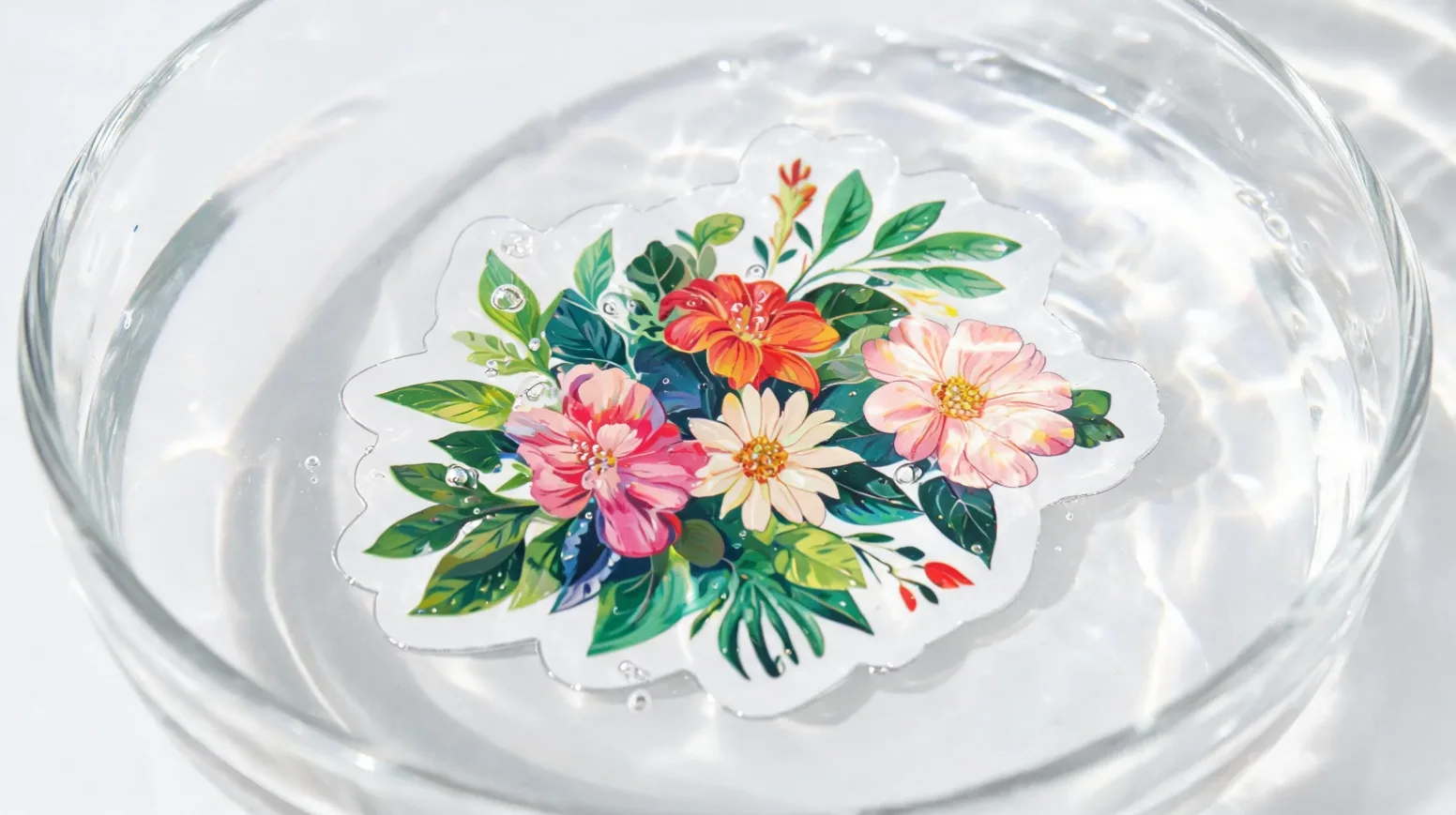
Yes — vinyl and BOPP stickers are fully waterproof; paper stickers are not. If your sticker will touch water, live outdoors, or ride on a water bottle, you need a vinyl or BOPP material with a UV laminate. This guide explains which materials are truly waterproof, whether lamination matters, and how to test your stickers before you commit to a full order.
Are all stickers waterproof?
No. “Waterproof” depends entirely on the material and the top coating. Standard paper stickers absorb water, wrinkle and fade quickly — they’re fine indoors but fail outdoors or on anything washable. Vinyl and BOPP (a durable film) are inherently water-resistant, and with a laminate they become fully waterproof and scratch-resistant. The ink matters too: quality printing sealed under a laminate won’t run when wet.
Which material is most waterproof?
Here’s how the common sticker materials compare:
| Material | Water resistance | UV resistance | Outdoor lifespan | Best use case |
|---|---|---|---|---|
| White vinyl | Excellent | High (laminated) | 3–5 years | Water bottles, laptops, outdoor labels |
| Clear vinyl | Excellent | High (laminated) | 3–5 years | Seamless labels on glass/light surfaces |
| BOPP | Excellent | Good | 2–4 years | Product labels, packaging, cosmetics |
| Holographic | Very good | Good | 2–4 years | Decorative, premium accents |
| Paper | Poor | Low | Indoor only | Indoor labels, thank-you stickers |
For most water-bottle and outdoor uses, white vinyl with a gloss laminate is the go-to. For transparent labels on glass or light packaging, clear vinyl gives a seamless look — see our guide on clear vs white stickers.
Does lamination make a sticker waterproof?
Lamination is the difference-maker. A laminate is a thin protective film applied over the printed sticker that:
- Seals the ink so it can’t run or smear when wet.
- Blocks UV rays that cause fading in sunlight.
- Adds scratch and scuff resistance for handling and washing.
Vinyl without lamination is water-resistant but will fade and scuff faster outdoors. Laminated vinyl is what earns the “fully waterproof, 3–5 year” rating. Paper with a laminate becomes splash-resistant but still isn’t truly waterproof, because water can wick in from the cut edges.
Best uses for waterproof stickers
- Water bottles & tumblers: dishwasher exposure demands laminated vinyl.
- Outdoor signs & equipment: UV-laminated vinyl survives sun and rain for years.
- Product labels: cosmetics, bath products and beverages need BOPP or vinyl that won’t wrinkle in humidity or the fridge.
- Cars, kayaks, coolers: outdoor-grade vinyl handles weather and washing.
How to test if your sticker is truly waterproof
Before committing to a big run, test a sample:
- Soak test: submerge the sticker in water for 24 hours. A waterproof sticker shows no lifting, bubbling or ink bleed.
- Rub test: rub the wet surface firmly with your thumb. The print should not smear.
- Scratch test: drag a fingernail across it — a laminate resists scuffing.
- Sun test: leave one in a sunny window for a few weeks and compare it to an unexposed one for fading.
Material choice is the foundation of durability — if you’re weighing options, our vinyl vs paper comparison and finishes guide go deeper.
Frequently asked questions
Are vinyl stickers waterproof?
Yes. Vinyl is inherently water-resistant, and with a laminate it’s fully waterproof and rated for 3–5 years outdoors.
Are paper stickers waterproof?
No. Paper absorbs water and wrinkles. A laminate adds splash resistance, but paper is never truly waterproof because edges still wick moisture.
Will waterproof stickers survive the dishwasher?
Laminated vinyl usually does on the top rack, but repeated high-heat cycles shorten any sticker’s life. Hand-washing is gentler.
Do waterproof stickers fade in the sun?
A UV laminate dramatically slows fading. Without it, even vinyl will fade over months of direct sunlight.
Is BOPP or vinyl better for product labels?
BOPP is cost-effective and excellent for packaging and cosmetics; vinyl is tougher for outdoor and heavy-duty use. Both are waterproof when laminated.
Order a waterproof sticker sample pack and test the durability yourself.
Buyer Notes for Waterproof Stickers: Everything You Need to Know Before You Order
For sticker sourcing, buyers should consider product format, finish, carton quantity, packaging style, and whether the design fits the intended retail or promotional use. StickerJaki focuses on carton-based wholesale supply, with standard product orders following MOV $200. Custom sticker pricing depends on the product type, material, finish, packaging, and quantity.
Sticker products can look similar online, but commercial results often depend on details such as adhesive choice, finish, packaging, sheet layout, and carton quantity. Buyers should match those specifications to the selling channel before choosing a product.
Quick sourcing checklist
- Define where and how the sticker will be used
- Compare material, finish, packaging, and carton quantity
- Use custom quoting when standard products do not match the project
For readers comparing options, the best next step is to move from general research to the right product or quote path. Useful resources: Wholesale sticker products · 3D relief stickers wholesale · Custom sticker manufacturing.
If the standard product range does not match the exact design, packaging, or application requirement, a custom quote is usually the better path. In that case, prepare the artwork, expected quantity, target material, finish, and packing method before contacting the supplier.
Commercial Planning Notes
Most sticker decisions become easier when buyers separate appearance from function. Appearance covers artwork style, finish, color, shape, and packaging impression. Function covers adhesive, surface compatibility, durability, carton quantity, and how the product will be handled after delivery. Both sides matter for a successful commercial sticker order.
Before placing a wholesale order, buyers should confirm the selling unit, carton quantity, product dimensions, material expectations, and whether a standard product or custom quote is the right path. This keeps the purchase aligned with retail display, online fulfillment, promotional use, or brand packaging needs.
For buyers comparing multiple sticker formats, the practical next step is to shortlist the intended use first, then match the product format to that use. Standard wholesale items are generally best for fast sourcing and retail assortments, while custom production is better when the design, material, dimensions, or packaging must follow a specific brand requirement.


