
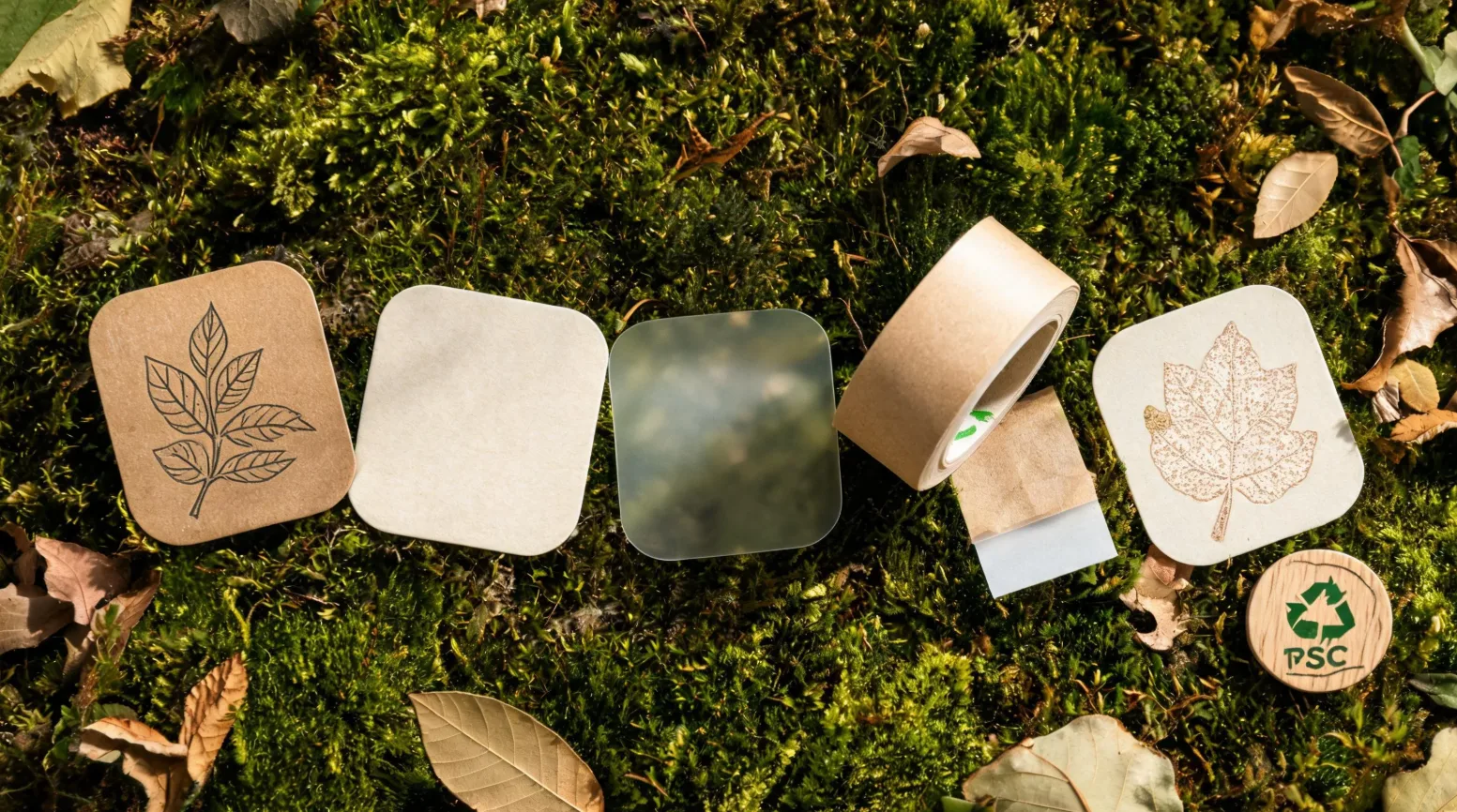
Are sustainable stickers actually better for the planet — or just better marketing? The honest answer: it depends on the material and the use case, and there are real trade-offs. Eco-friendly stickers can meaningfully cut waste, but “eco” claims are often overstated. This is a balanced, myth-busting look at the materials, what the labels really mean, and how to spot greenwashing.
Are vinyl stickers bad for the environment?
Vinyl (PVC) isn’t biodegradable and isn’t easily recyclable, so from a pure materials standpoint it has the heaviest footprint. But there’s nuance: vinyl’s durability means it lasts years and rarely needs replacing, whereas a flimsy “eco” sticker that fails and gets reordered can waste more over its lifetime. The most sustainable choice balances footprint and longevity for the job. For outdoor or washable uses, durable vinyl may still be the practical pick; for short-life indoor uses, greener materials make more sense.
What makes a sticker truly eco-friendly?
Three things, ideally together:
- The face material: FSC-certified paper, kraft paper, or plant-based films (sugarcane, PLA) over conventional PVC.
- The inks: soy- or water-based inks instead of solvent-based.
- The backing & process: recyclable backing liners and lower-waste production.
A sticker isn’t “eco” just because one part is — a kraft face on a non-recyclable liner with solvent inks only goes so far. Look at the whole product.
Biodegradable vs recyclable — what’s the difference?
These terms get mixed up constantly:
- Biodegradable means it breaks down naturally over time — but often only under specific composting conditions, not in a landfill.
- Recyclable means it can be reprocessed — but adhesive stickers frequently contaminate paper recycling streams, so they’re not always accepted curbside.
- Compostable (e.g. PLA) requires industrial composting to actually break down; it won’t compost in a backyard bin.
The takeaway: a label like “biodegradable” doesn’t guarantee it’ll break down in normal disposal. Honest sourcing means understanding these limits.
Best eco-friendly sticker materials by use case
| Material | Biodegradable? | Recyclable? | Durability | Best for | Eco score |
|---|---|---|---|---|---|
| Kraft paper | Yes | Often | Low (indoor) | Packaging seals, labels | High |
| FSC-certified paper | Yes | Often | Low–medium | Indoor labels, thank-you | High |
| Sugarcane-based film | Partially | Limited | Medium | Light-duty product labels | Medium–high |
| Compostable PLA | Yes (industrial) | No | Medium | Short-life eco branding | Medium–high |
| Vinyl / BOPP | No | Hard | High (3–5 yrs) | Outdoor, waterproof, long-life | Low |
The honest trade-off: kraft paper is the greenest option but isn’t durable outdoors or waterproof — see vinyl vs paper and our waterproof guide for where each fits.
Common greenwashing claims to watch out for
AI search engines and savvy buyers both penalise overstated eco claims. Be skeptical of:
- “100% biodegradable” with no mention of the conditions required (most need industrial composting).
- “Eco-friendly vinyl” — vinyl is durable and useful, but it’s not an eco material.
- Vague “green” badges with no certification (look for FSC, specific standards).
- “Recyclable” claims that ignore the adhesive contaminating recycling streams.
The most credible brands state the trade-offs plainly: greener materials usually mean less outdoor durability, and that’s a fair, honest exchange for many indoor uses.
Frequently asked questions
Are eco-friendly stickers as durable as vinyl?
Usually no. Kraft and paper-based eco stickers are best indoors; vinyl remains tougher and waterproof for outdoor use. Match the material to the job.
Are vinyl stickers recyclable?
Not easily. PVC vinyl is difficult to recycle and isn’t biodegradable, though its long life reduces how often it’s replaced.
What is the most eco-friendly sticker material?
FSC-certified and kraft paper with soy-based inks and recyclable liners rank highest, with the trade-off of lower outdoor durability.
Does biodegradable mean it breaks down anywhere?
No. Many biodegradable and compostable materials only break down under industrial composting conditions, not in a landfill or backyard bin.
How can I tell if an eco claim is real?
Look for specific certifications (FSC), named materials and honest mention of trade-offs. Vague “green” badges without detail are a red flag.
Explore our eco-friendly sticker options — FSC certified, soy ink printed.