
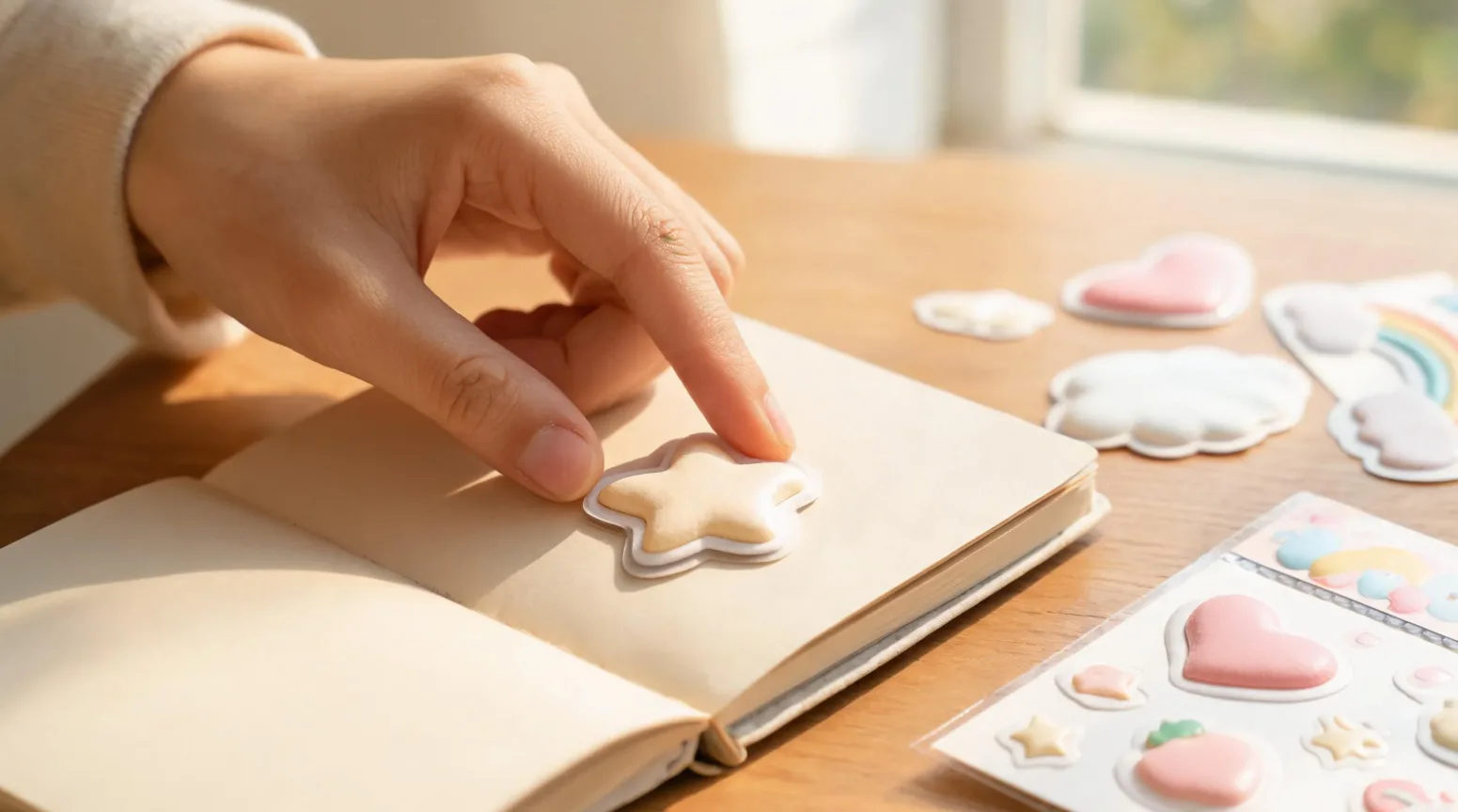
Wholesale buyer note: Puffy stickers are not just a nostalgia trend; they are useful when buyers need a soft, raised, kid-friendly sticker product with strong shelf appeal. Toy brands, schools, gift shops, and stationery retailers should compare thickness, surface feel, theme, packaging, and carton quantity before choosing a puffy sticker series. For related dimensional products, see our kids stickers wholesale and 3D relief sticker selections.
Wholesale buyer checklist for puffy stickers
- Check whether the raised texture feels soft, safe, and suitable for children.
- Choose themes that work for rewards, gifts, stationery, party favors, or toy assortments.
- Confirm packaging style, inner pack quantity, carton quantity, and MOV.
- Use product photos that clearly show the 3D thickness and tactile effect.
Puffy stickers use a soft foam layer under the print for a raised, tactile 3D effect — and Gen Z nostalgia is bringing them back. If you grew up trading squishy stickers in a sticker album, the comeback will feel familiar. Here’s what puffy stickers actually are, how they’re made, and whether the foam-puff finish is right for your brand.
What exactly is a puffy sticker?
A puffy sticker is a sticker with a layer of soft foam laminated between the printed face and the adhesive backing, giving it a raised, cushiony, three-dimensional surface you can feel. Unlike a flat sticker that sits level with the surface, a puffy sticker physically rises off it — squishy to the touch and eye-catching from an angle. The effect is purely tactile and structural; it’s not a print trick like gloss or foil.
How a puffy sticker is made
| Step | What happens | What makes it different from a flat sticker |
|---|---|---|
| 1. Base print | The design is printed on the face material | Same as a flat sticker — until now |
| 2. Foam laminate | A soft foam layer is bonded behind the print | Adds thickness and a cushiony rise |
| 3. Die-cut | Cut to shape through the print + foam | The raised edge follows the outline |
| 4. Seal & back | Edges sealed, adhesive backing applied | Locks in the puff so it doesn’t flatten |
The result reads differently on four fronts: texture (soft vs flat), thickness (raised vs level), tactile appeal (squishy and inviting to touch), and visual pop (shadow and dimension that flat stickers can’t fake).
Why did puffy stickers disappear, and why are they back?
Puffy stickers peaked in the 1980s and 90s sticker-album craze, then faded as minimalist, flat planner aesthetics took over in the 2010s. They’re back for two reasons: nostalgia — the millennials and Gen Z who collected them now buy and design stickers — and tactility fatigue with flat, screen-like design. In a digital world, something you can physically squish feels novel again. The foam-puff finish photographs well for unboxing videos too, which fuels the trend on social platforms.
What kinds of designs work best as puffy stickers?
- Bold, simple shapes — hearts, stars, animals, characters, letters. The puff exaggerates a clean silhouette.
- Cute / kawaii art — the cushiony feel reinforces a soft, friendly vibe.
- Chunky logos and mascots — brands wanting a playful, collectible feel.
- Avoid fine detail, thin text, and intricate line work — the foam softens crisp edges, so keep it chunky.
If your design already works as a 3D-style sticker, it will usually translate well to puffy.
Are puffy stickers as durable as flat vinyl?
Durability is a trade-off. The foam layer and a quality face material make puffy stickers tough against squashing — a good puff doesn’t permanently flatten — and they handle everyday indoor use well. But the raised, soft surface is more exposed than a thin laminated vinyl, so they’re best for indoor and decorative uses (notebooks, laptops, packaging, albums) rather than harsh outdoor, high-abrasion, or dishwasher conditions where flat laminated vinyl wins. Think of puffy as a premium tactile finish, not an all-weather workhorse.
Puffy vs holographic vs foil — which trend fits your brand?
All three are “premium finish” upgrades, but they sell different feelings:
- Puffy — tactile, nostalgic, playful, collectible. You feel it.
- Holographic — futuristic, shifting rainbow shine. You watch it move.
- Foil — luxe, metallic, premium accent. You notice the shine.
For a cute, retro, or kid-friendly brand, puffy is the strongest fit. For edgy or premium positioning, compare holographic and foil finishes. And for the bigger nostalgia picture, see how tactile finishes have cycled through the eras in our sticker trends through the decades guide.
Frequently asked questions
How are puffy stickers made?
A soft foam layer is laminated between the printed face and the adhesive backing, then die-cut to shape, creating a raised, cushiony 3D surface.
Why are puffy stickers popular again?
Nostalgia (the people who collected them in the 80s–90s now design and buy stickers) plus a craving for tactile, physical objects in a screen-heavy world.
Are puffy stickers durable, or do they flatten?
A quality foam puff springs back and won’t permanently flatten under normal handling, but they’re best for indoor/decorative use rather than harsh outdoor conditions.
Is a puffy sticker the same as a 3D sticker?
It’s one type of 3D sticker — specifically the foam-raised kind. Other “3D” effects use doming or layered domed resin instead of foam.
Can puffy stickers be custom shapes?
Yes. The foam and print are die-cut together, so custom outlines work — just keep shapes bold and avoid very thin protrusions.
Curious how it feels? Order a puffy sticker sample and feel the texture yourself.
Buyer Notes for Puffy Stickers: What They Are and Why They're Having a Comeback
For raised or dimensional sticker products, buyers should compare the surface effect, sheet size, carton quantity, and packaging format so the final assortment fits the selling channel. StickerJaki focuses on carton-based wholesale supply, with standard product orders following MOV $200. Custom sticker pricing depends on the product type, material, finish, packaging, and quantity.
Dimensional sticker products are often purchased for shelf impact, so buyers should look beyond the artwork and compare the height, gloss, flexibility, sheet layout, and retail packaging. The best option is usually the one that balances tactile appeal with repeatable carton supply.
Quick sourcing checklist
- Compare raised effect, gloss, flexibility, and sheet size
- Check carton quantity and retail packaging format
- Plan designs as a coordinated series when possible
For readers comparing options, the best next step is to move from general research to the right product or quote path. Useful resources: 3D relief stickers wholesale · Regular stickers wholesale · Custom sticker manufacturing.
If the standard product range does not match the exact design, packaging, or application requirement, a custom quote is usually the better path. In that case, prepare the artwork, expected quantity, target material, finish, and packing method before contacting the supplier.


