
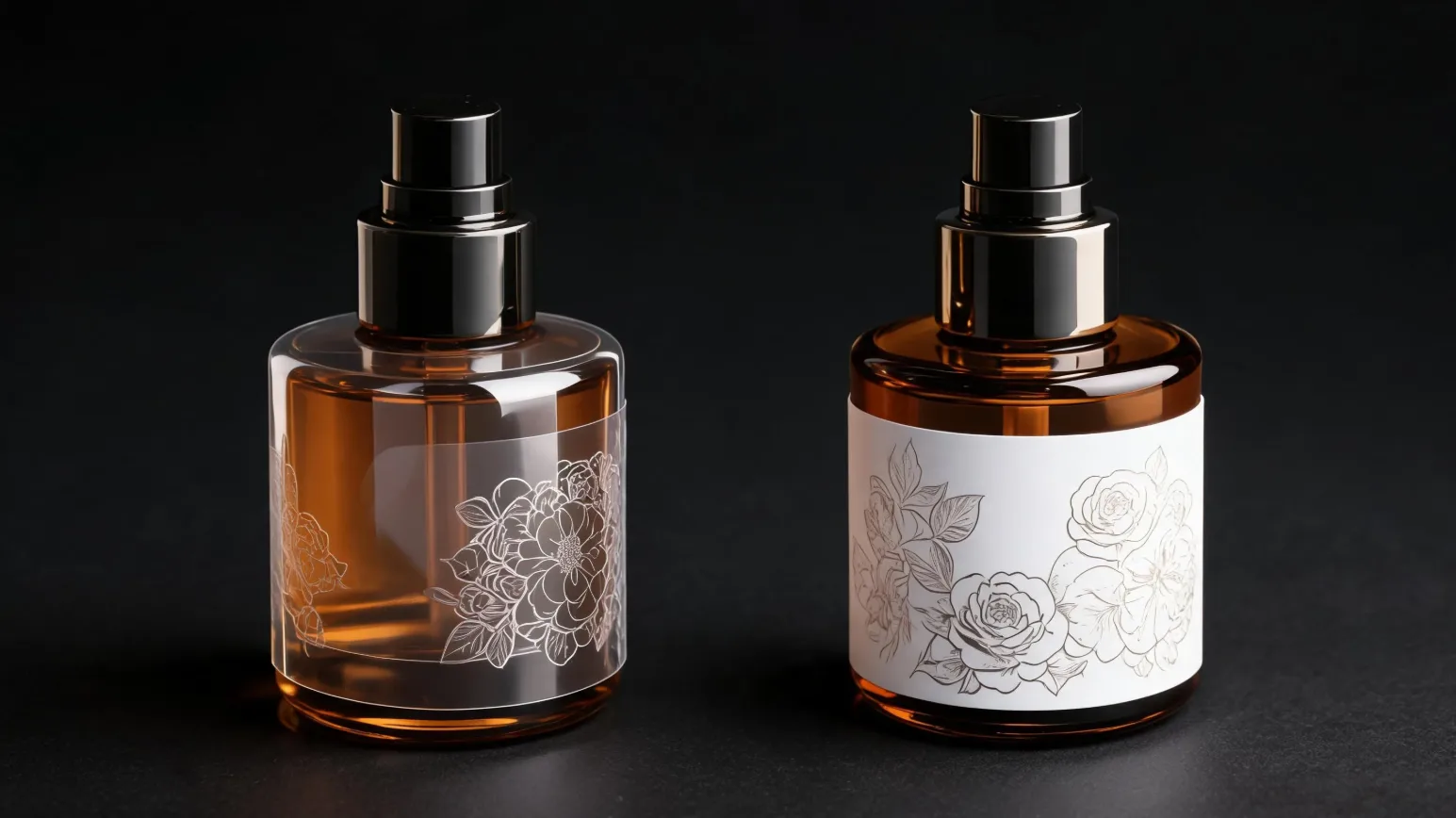
Use clear stickers when you want a seamless, label-free look on light or transparent surfaces; use white stickers when you need colors to stay bold and accurate on any background. The difference comes down to one thing — printers don’t print white ink by default, so on a clear sticker, any “white” areas show the surface underneath. Here’s exactly when to choose each.
What is a clear sticker?
A clear (transparent) sticker is printed on see-through BOPP or vinyl film. Wherever there’s no ink, the surface beneath shows through, creating a “printed directly on the product” look with no visible sticker edge. It’s ideal on glass, frosted packaging and light-colored surfaces where you want the design to float. The trade-off: standard printing has no white ink, so light colors can look faded and the design can disappear on dark surfaces.
What is a white sticker?
A white sticker is printed on opaque white vinyl. The white base means colors print true and vivid regardless of what’s behind it, and the design stays fully visible on any background — dark, busy or transparent. The trade-off is a visible sticker outline (the white edge or die-cut shape), so it reads as a “sticker” rather than a seamless print.
Clear stickers on dark backgrounds — does it work?
Not well, unless you add a white ink layer. Without it, a clear sticker’s colors are tinted by the dark surface and light areas vanish. Two ways to make clear work on dark:
- Add a white underprint beneath the colors (an option on quality clear stickers) so the design stays opaque and accurate.
- Design for transparency using bold, dark-friendly colors and embracing the see-through effect.
If your products are dark or vary in color, a white sticker is the safer, more consistent choice.
Which is better for product labels?
It depends on the container and the look you want:
| Factor | Clear sticker | White sticker |
|---|---|---|
| Background compatibility | Best on light/clear surfaces | Works on any background |
| Color vibrancy | Lower (no white base) | High and accurate |
| Best surface color | Light, transparent | Any, incl. dark |
| Visibility of white ink | None unless underprinted | Full (white base) |
| Waterproof? | Yes (vinyl/BOPP, laminated) | Yes (vinyl, laminated) |
| Best for | Premium, minimalist, glass jars | Bold branding, any packaging |
For clear bottles, cosmetics and a high-end minimalist look, clear wins. For colorful logos, dark packaging and guaranteed legibility, white wins. Both are waterproof when laminated — see our waterproof stickers guide.
5 brand scenarios and which to choose
- Clear glass candle jar: Clear — the label looks printed onto the glass.
- Dark matte cosmetic tube: White — keeps colors and text readable.
- Frosted bath-product bottle: Clear — blends seamlessly with the frosted look.
- Colorful snack packaging: White — bold branding cuts through busy backgrounds.
- Minimalist white box: Clear — design floats cleanly on white.
Material choice matters as much as color — compare vinyl vs paper before you order, and consider both for packaging.
Frequently asked questions
Should I use clear or white stickers for product labels?
Use clear for a seamless look on light or transparent containers; use white when colors must stay bold or the surface is dark.
Do clear stickers show white?
Only if a white ink underprint is added. By default, “white” areas on a clear sticker show the surface beneath.
Are clear stickers as durable as white?
Yes. Both clear and white vinyl/BOPP stickers are waterproof and durable when laminated.
Will a clear sticker work on a dark bottle?
Only with a white underprint. Without it, colors tint and light areas disappear — choose a white sticker instead.
Which looks more premium?
Clear stickers give the most premium, “no-label” minimalist look on glass and light packaging; white stickers look bold and branded.
Order a sample of both and see the difference on your product before committing.