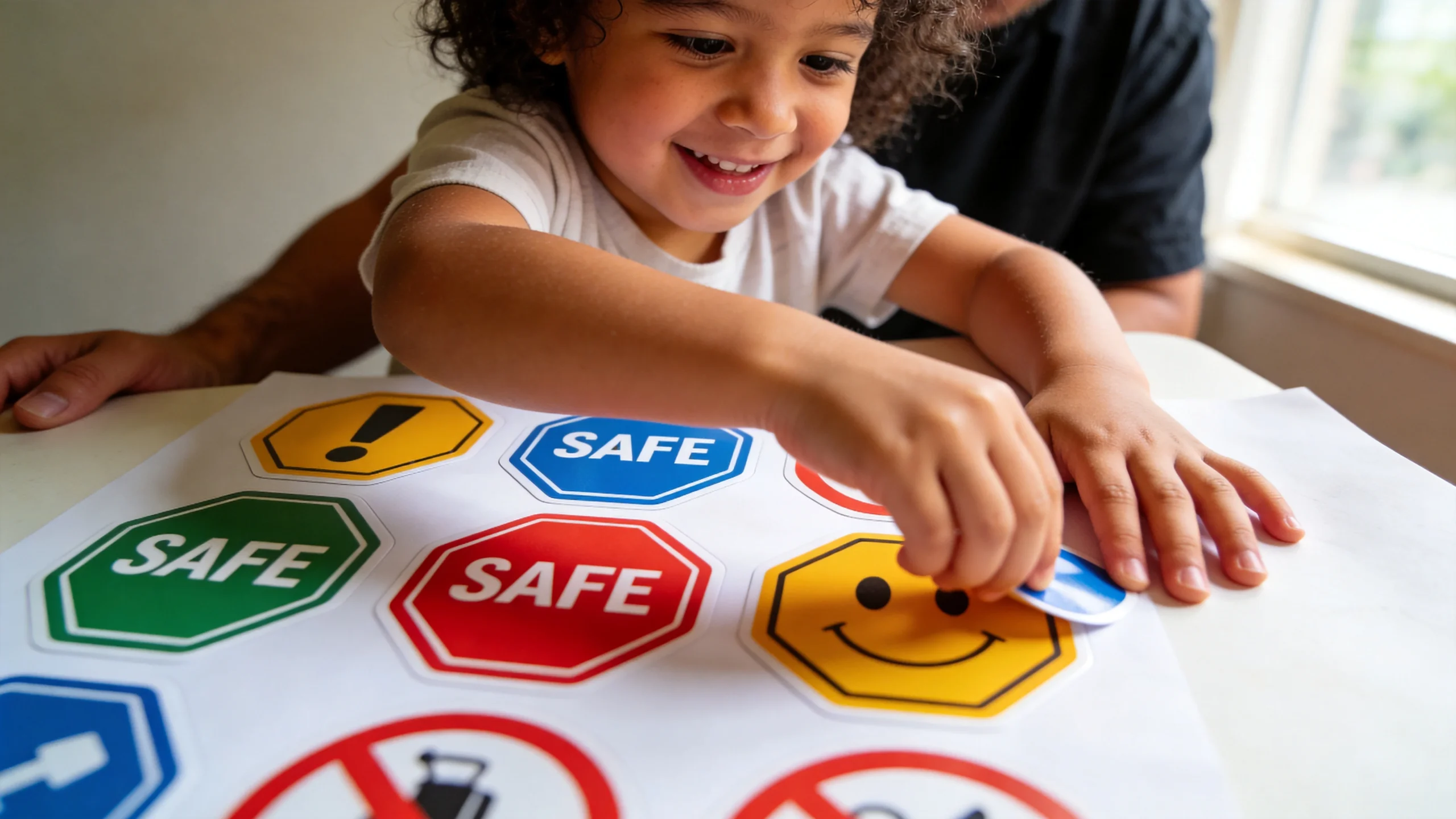
Wholesale buyer note: Safety is one of the first things buyers should check when sourcing children’s stickers for schools, toy brands, retailers, gift shops, or activity packs. Non-toxic sticker products should be reviewed by material, adhesive, age suitability, packaging, small parts risk, and market requirements before bulk ordering. You can also browse our kids stickers wholesale page for related product options.
Wholesale buyer checklist for non-toxic kids stickers
- Confirm whether the product is intended for young children, school use, retail gifts, or supervised craft activities.
- Check material, adhesive, ink, packaging, and any small detachable parts.
- Ask for test requirements based on your destination market and sales channel.
- Keep safety wording clear on packaging and avoid claims that cannot be supported.
Kids touch, peel, lick, and occasionally eat their stickers. So are children’s stickers safe? Mostly yes — but the difference between safe and unsafe comes down to a few specific things every parent should know.
Look for These Safety Certifications
- ASTM F963: the US standard for toy safety. Covers lead, phthalates, and small parts.
- EN 71-3: the EU equivalent. Limits heavy metals (lead, mercury, cadmium).
- CPC certificate (USA): Children’s Product Certificate. Reputable brands keep these on file.
- “Non-toxic” / “Lead-free” labels: required to be honest claims (regulated terms).
What Matters in the Materials
- Adhesive: water-based is safer than solvent-based. The latter can release VOCs.
- Substrate: paper or BPA-free vinyl is preferable to industrial PVC.
- Pigments: food-grade or toy-grade. Some imported, unbranded stickers use industrial pigments containing trace lead.
- Coating: UV-cured coatings are safer than melamine or formaldehyde-based finishes.
Age-Appropriate Sizing
- Under 3 years: all sticker pieces should be larger than 30mm (no choking hazard).
- 3–6 years: medium stickers OK, but avoid foil glitter that can flake.
- 6+ years: most stickers safe, but supervise hand-to-mouth tendencies.
Red Flags to Avoid
- Strong chemical smell when you open the package.
- No manufacturer information or country of origin.
- Stickers marketed for adults but sold to kids (different safety standards).
- Cheap bulk lots with no certification.
- Glitter that flakes off easily.
What to Do If You’re Unsure
- Email the manufacturer for the safety certificate.
- Check for recalls on cpsc.gov (US) or rapex.eu (EU).
- If buying for daycares or schools, ask the supplier for documentation in writing.
The StickerJaki Standard
Every StickerJaki product passes EN 71-3 and ASTM F963 testing. Adhesives are water-based, pigments are food-grade, and no PVC, phthalates, or heavy metals are used. View our full sticker series — every pack is age-rated and ready for daycares, schools, and family use.
Buyer Notes for Are Children's Stickers Safe? A Parent's Guide to Non-Toxic Stickers
For children-focused sticker products, buyers should pay close attention to age suitability, material safety, easy handling, packaging clarity, and the type of activity the product supports. StickerJaki focuses on carton-based wholesale supply, with standard product orders following MOV $200. Custom sticker pricing depends on the product type, material, finish, packaging, and quantity.
Children-focused sticker assortments need clear age positioning and simple handling. Buyers should review packaging warnings, sheet size, adhesive behavior, and whether the activity can be understood quickly by parents, teachers, or gift buyers.
Quick sourcing checklist
- Check age suitability and safety expectations
- Choose simple activities that are easy to understand
- Review packaging clarity for parents, schools, and gift buyers
For readers comparing options, the best next step is to move from general research to the right product or quote path. Useful resources: Arts and crafts stickers · Sticker books wholesale · Wholesale sticker products.
If the standard product range does not match the exact design, packaging, or application requirement, a custom quote is usually the better path. In that case, prepare the artwork, expected quantity, target material, finish, and packing method before contacting the supplier.
Commercial Planning Notes
Kids sticker products should be judged by safety, clarity, and play value. Parents and teachers need to understand the activity quickly, while children need stickers that are easy to peel, place, and enjoy. Age positioning, warning text, material choice, and package instructions should be reviewed before a product is added to a commercial range.
The best children’s sticker assortments usually combine simple interaction with strong visual themes. Animals, rewards, dress-up play, scenes, holidays, and craft activities can all work, but buyers should check whether the product encourages repeat use rather than a one-time peel-and-discard experience.
For buyers comparing multiple sticker formats, the practical next step is to shortlist the intended use first, then match the product format to that use. Standard wholesale items are generally best for fast sourcing and retail assortments, while custom production is better when the design, material, dimensions, or packaging must follow a specific brand requirement.
Frequently Asked Questions
What should buyers check for children’s sticker products?
Buyers should review age suitability, material safety expectations, ease of peeling, packaging clarity, warning text, and whether the activity is simple enough for the intended user.
Which sticker formats work well for kids?
Reward stickers, dress-up books, scene sticker books, craft stickers, scratch activities, and themed assortments can all work well when the design and activity are easy to understand.
Are kids stickers better as standard or custom products?
Standard wholesale products are useful for fast sourcing and mixed assortments. Custom production is better when a buyer needs original characters, branded packaging, or a specific activity format.


