
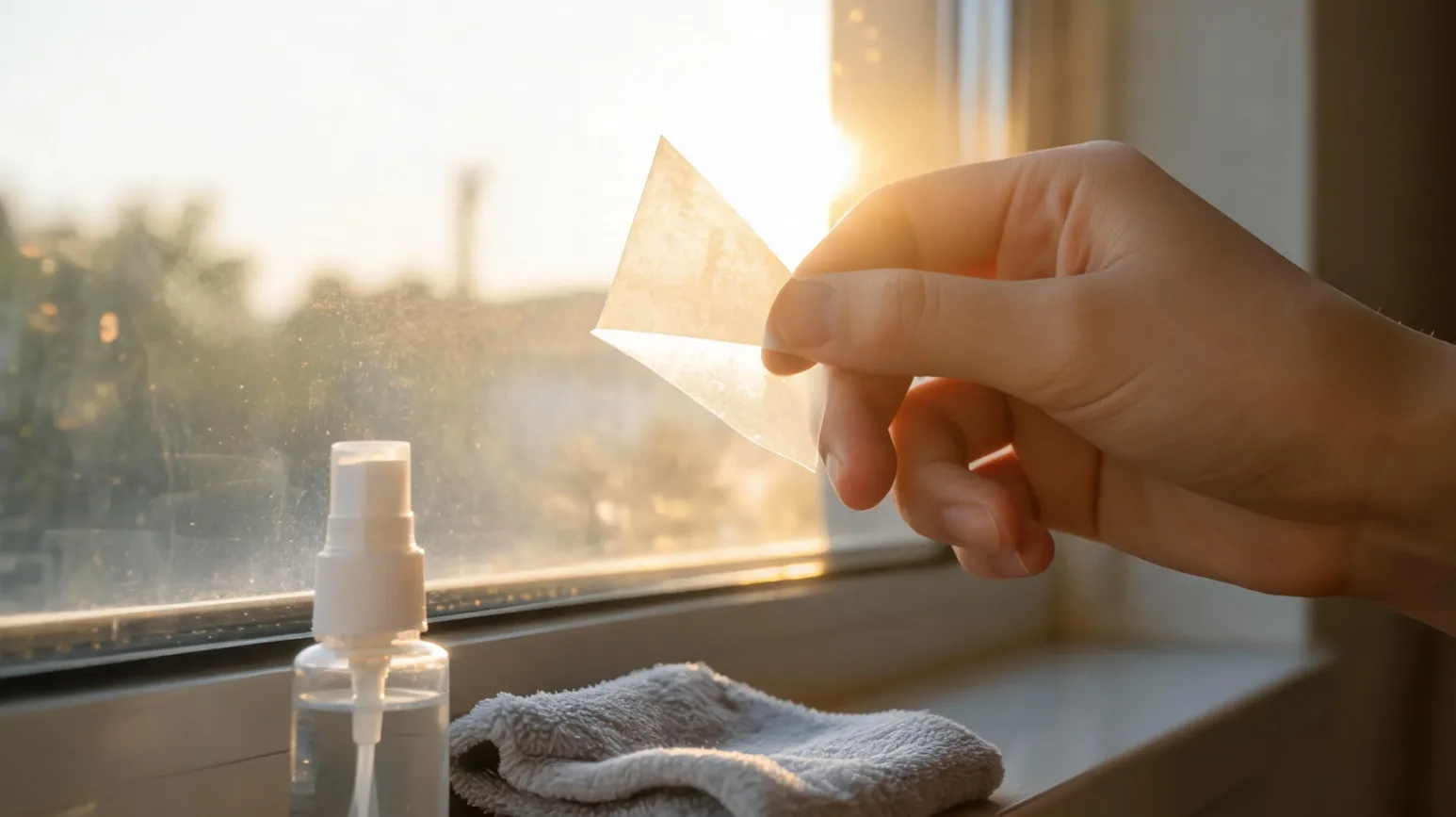
Peeling a sticker the wrong way can scratch glass, lift paint, tear paper, or pull up wood finish. The safe approach is almost always the same: warm the adhesive, then peel slowly at a low angle — with small tweaks per surface. This guide is about the peeling technique itself; for cleaning up any glue left behind afterward, see our sticker residue removal guide.
Why some stickers are harder to remove than others
Three things decide how hard a sticker fights back: the adhesive (permanent acrylic grips far harder than a removable adhesive), the age (adhesive cures and bonds tighter over months and years), and the surface (porous materials like wood and paper absorb adhesive, while smooth glass and metal release more easily). Heat and patience overcome almost all of it; force and speed are what cause damage.
The heat method
Heat softens the adhesive so it releases instead of tearing. It’s the safest first move on almost any surface.
- Warm the sticker with a hair dryer on low–medium for 30–60 seconds, holding it a few inches away and keeping it moving.
- Test a corner — when it lifts without resistance, the adhesive has softened.
- Peel while it’s still warm; re-warm if it cools and starts to cling again.
The slow-peel angle method
How you pull matters as much as heat:
- Lift one corner with a fingernail or a plastic card (never a metal blade on delicate surfaces).
- Pull back on itself at a low ~45° angle, not straight up — a low angle peels the adhesive off cleanly instead of stretching and snapping it.
- Go slowly and steadily. If it resists, stop and add more heat rather than yanking.
Surface-specific techniques
| Surface | Safe method | What to avoid |
|---|---|---|
| Glass | Heat + slow peel; a plastic scraper for stubborn bits | Metal blades (scratch); abrasive pads |
| Wood furniture | Gentle heat, very slow peel along the grain | Soaking (warps wood); high heat (lifts finish) |
| Plastic | Low heat + slow peel; mild soapy water | High heat (warps/melts); harsh solvents (cloud plastic) |
| Metal | Heat + slow peel; usually releases easily | Aggressive scraping that scratches coating |
| Fabric | Freeze to harden adhesive, then peel; or gentle heat | Pulling hard (frays threads); wet-soaking delicate fabric |
| Painted wall | Low heat, slow peel; test a corner first | High heat or fast pulls (lift paint); only on fully cured paint |
When to just order a removable sticker instead
If a sticker is meant to come off later — a window promo, a rental-friendly wall decal, a seasonal label, or anything customers will remove — the easiest “removal technique” is choosing the right adhesive up front. A removable adhesive peels away cleanly with little heat and usually leaves no residue at all, saving you this whole process. If repositioning or clean removal matters, specify it when you order.
Frequently asked questions
How do I remove a sticker from glass without scratching it?
Warm it with a hair dryer, peel slowly at a low angle, and use a plastic scraper (never metal) for any stubborn bits.
What’s the safest way to peel off an old sticker?
Heat it first to soften the cured adhesive, then peel back on itself at ~45° slowly. Re-warm if it starts to cling.
How do I get a sticker off wood without damaging the finish?
Use gentle heat and peel very slowly along the grain. Avoid soaking and high heat, which can warp wood or lift the finish.
Will a hair dryer damage the surface?
Not on low–medium with the dryer kept moving and a few inches away. Avoid prolonged high heat on plastic, painted, or finished surfaces.
What if there’s glue left after peeling?
That’s residue, a separate step — see our residue removal guide for safe ways to dissolve it.
Next time, choose a removable sticker designed to come off clean.