This guide is written for buyers, parents, educators, publishers, and children’s product teams who want a practical way to plan bilingual sticker activities without overpromising performance or safety. The goal is to make the product easier to use, easier to source, and clearer for the final customer.
Start with useful vocabulary
Choose words children can see, touch, or act out: animals, foods, colors, feelings, weather, classroom items, family words, and daily routines. Avoid long word lists that are difficult to remember. A small set used repeatedly is more useful than a crowded sheet.
For wholesale or custom production, write down the intended user, destination market, quantity, packaging style, and any test requirements before artwork begins. This keeps design decisions connected to real buying conditions instead of guesswork.
Pair text with strong visuals
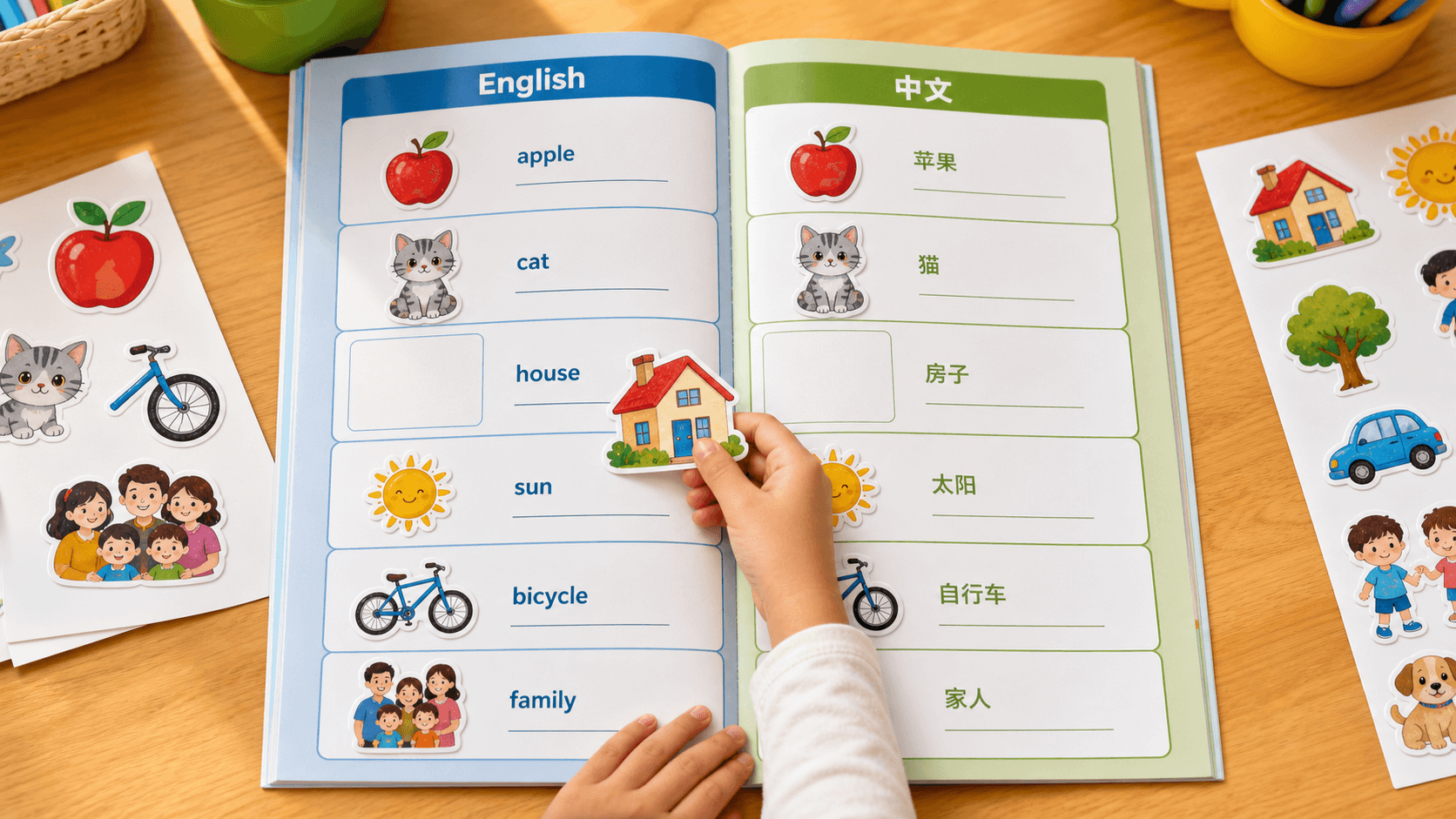
Every word should be supported by a clear illustration. Use consistent icon style, readable type, and enough white space. If two languages use different scripts, check line length and font support before printing.
For wholesale or custom production, write down the intended user, destination market, quantity, packaging style, and any test requirements before artwork begins. This keeps design decisions connected to real buying conditions instead of guesswork.
Design activity formats
Matching games, scene building, label-the-room activities, emotion cards, and routine charts can all use stickers. Give adults short prompts such as “Say the word,” “Find the object,” or “Use it in a sentence.”
For wholesale or custom production, write down the intended user, destination market, quantity, packaging style, and any test requirements before artwork begins. This keeps design decisions connected to real buying conditions instead of guesswork.
Be culturally careful
Bilingual products should avoid stereotypes and should be reviewed by fluent speakers. Translation alone is not enough. Local usage, tone, and images matter, especially for family, food, holidays, and classroom themes.
For wholesale or custom production, write down the intended user, destination market, quantity, packaging style, and any test requirements before artwork begins. This keeps design decisions connected to real buying conditions instead of guesswork.
Planning table
| Theme | Sticker examples | Practice prompt |
|---|---|---|
| Animals | Cat, dog, bird, fish | Find and say the animal name |
| Food | Rice, apple, soup, bread | Choose what belongs in lunch |
| Feelings | Happy, tired, surprised, calm | Match a face to a word |
| Daily routine | Brush, read, sleep, pack bag | Put the routine in order |
Buyer checklist
- Define the user age range and supervision context.
- Confirm product format, sheet size, piece count, and packaging.
- Avoid safety, waterproof, washable, food-contact, or skin-contact claims without test evidence.
- Prepare original or properly licensed artwork.
- Request a proof or sample before bulk production.
Related StickerJaki guides
- /stickers-for-kids-crafts/
- /sticker-sheet-layout-guide/
- /custom-stickers-for-education/
- /custom-shape-stickers/
FAQ
Can stickers help with language learning?
They can provide playful vocabulary practice, but learning outcomes should not be guaranteed.
How many words should one sheet include?
Keep beginner sheets focused, often 8–20 words depending on age and format.
Should both languages appear on each sticker?
Often yes, but layout depends on script length, readability, and activity goal.
Who should review translations?
Use fluent speakers or educators familiar with the destination market.
What should buyers provide?
Language pair, age range, vocabulary theme, artwork style, and market requirements.


