This guide is written for buyers, parents, educators, publishers, and children’s product teams who want a practical way to plan mystery sticker packs for kids without overpromising performance or safety. The goal is to make the product easier to use, easier to source, and clearer for the final customer.
What makes mystery packs appealing
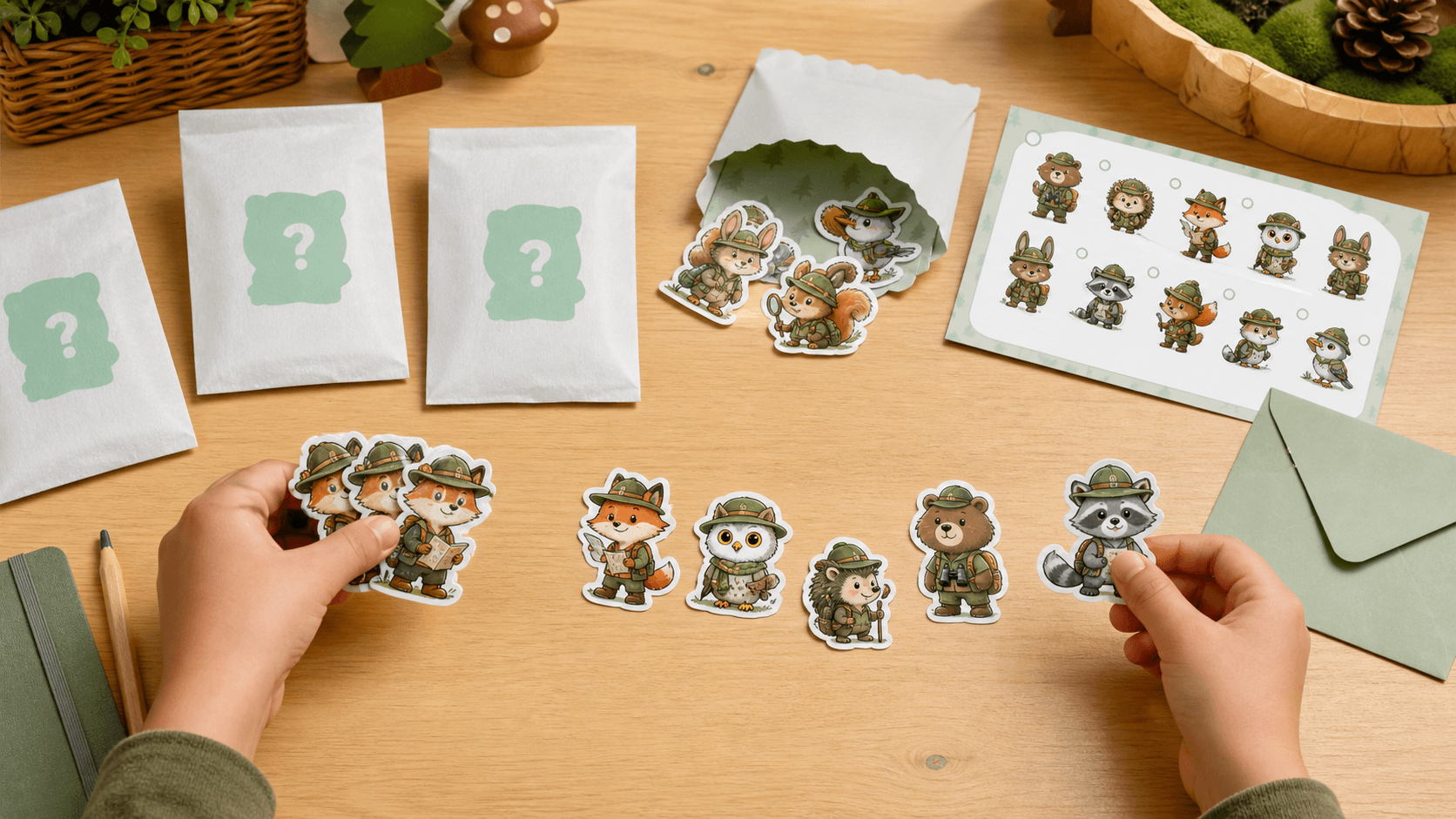
Children enjoy surprise, completion, trading, and discovery. A well-designed pack creates anticipation without relying on pressure. The best collections have enough variety to feel fresh and enough structure to feel fair.
For wholesale or custom production, write down the intended user, destination market, quantity, packaging style, and any test requirements before artwork begins. This keeps design decisions connected to real buying conditions instead of guesswork.
Build the collection system
Plan common, uncommon, and special designs carefully. If rarity is used, explain it responsibly and avoid manipulative language. Duplicate control, assortment planning, and visible series checklists can make the experience less frustrating.
For wholesale or custom production, write down the intended user, destination market, quantity, packaging style, and any test requirements before artwork begins. This keeps design decisions connected to real buying conditions instead of guesswork.
Package for clarity
Packaging should state quantity, age guidance, material notes, and whether designs vary. If packs are sold in stores, make sure the price and value are understandable even when the exact designs are hidden.
For wholesale or custom production, write down the intended user, destination market, quantity, packaging style, and any test requirements before artwork begins. This keeps design decisions connected to real buying conditions instead of guesswork.
Use ethical design rules
Avoid aggressive scarcity claims, misleading odds, or mechanics that encourage excessive purchasing. For children, the product should still feel complete and enjoyable even if they do not collect every design.
For wholesale or custom production, write down the intended user, destination market, quantity, packaging style, and any test requirements before artwork begins. This keeps design decisions connected to real buying conditions instead of guesswork.
Planning table
| Design element | Good practice | Risk to avoid |
|---|---|---|
| Rarity | Simple, transparent tiers | Pressure-based scarcity |
| Duplicates | Assortment planning and swaps | Too many repeats |
| Checklist | Helps track the set | Making completion feel mandatory |
| Packaging | Clear quantity and age notes | Hiding important details |
Buyer checklist
- Define the user age range and supervision context.
- Confirm product format, sheet size, piece count, and packaging.
- Avoid safety, waterproof, washable, food-contact, or skin-contact claims without test evidence.
- Prepare original or properly licensed artwork.
- Request a proof or sample before bulk production.
Related StickerJaki guides
- /sticker-packs-guide/
- /custom-stickers-for-packaging/
- /sticker-sheet-layout-guide/
- /stickers-for-kids-crafts/
FAQ
What is a mystery sticker pack?
It is a pack where the buyer knows the collection theme but not the exact designs inside.
Are rarity tiers necessary?
No. Mystery can work with equal odds and strong artwork.
How do you reduce duplicate frustration?
Plan assortments, limit repeat patterns, and consider visible series checklists.
What should packaging disclose?
Quantity, age guidance, material notes, and whether designs vary.
What makes the design ethical?
The pack should be fun without misleading odds, pressure language, or excessive purchase prompts.


