
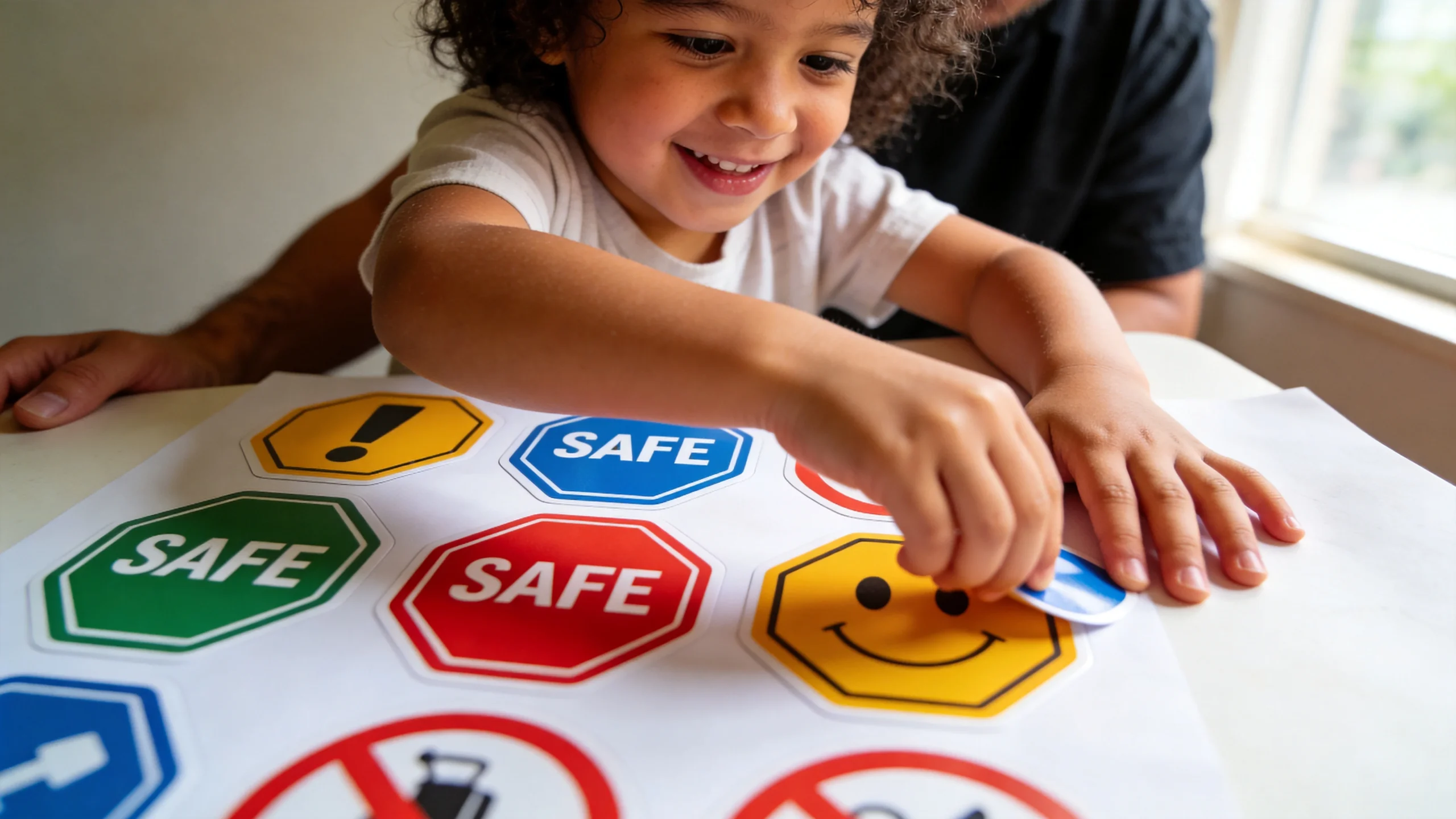
Kids touch, peel, lick, and occasionally eat their stickers. So are children’s stickers safe? Mostly yes — but the difference between safe and unsafe comes down to a few specific things every parent should know.
Look for These Safety Certifications
- ASTM F963: the US standard for toy safety. Covers lead, phthalates, and small parts.
- EN 71-3: the EU equivalent. Limits heavy metals (lead, mercury, cadmium).
- CPC certificate (USA): Children’s Product Certificate. Reputable brands keep these on file.
- “Non-toxic” / “Lead-free” labels: required to be honest claims (regulated terms).
What Matters in the Materials
- Adhesive: water-based is safer than solvent-based. The latter can release VOCs.
- Substrate: paper or BPA-free vinyl is preferable to industrial PVC.
- Pigments: food-grade or toy-grade. Some imported, unbranded stickers use industrial pigments containing trace lead.
- Coating: UV-cured coatings are safer than melamine or formaldehyde-based finishes.
Age-Appropriate Sizing
- Under 3 years: all sticker pieces should be larger than 30mm (no choking hazard).
- 3–6 years: medium stickers OK, but avoid foil glitter that can flake.
- 6+ years: most stickers safe, but supervise hand-to-mouth tendencies.
Red Flags to Avoid
- Strong chemical smell when you open the package.
- No manufacturer information or country of origin.
- Stickers marketed for adults but sold to kids (different safety standards).
- Cheap bulk lots with no certification.
- Glitter that flakes off easily.
What to Do If You’re Unsure
- Email the manufacturer for the safety certificate.
- Check for recalls on cpsc.gov (US) or rapex.eu (EU).
- If buying for daycares or schools, ask the supplier for documentation in writing.
The StickerJaki Standard
Every StickerJaki product passes EN 71-3 and ASTM F963 testing. Adhesives are water-based, pigments are food-grade, and no PVC, phthalates, or heavy metals are used. View our full sticker series — every pack is age-rated and ready for daycares, schools, and family use.