This guide is written for buyers, parents, educators, publishers, and children’s product teams who want a practical way to plan sticker mosaic for kids without overpromising performance or safety. The goal is to make the product easier to use, easier to source, and clearer for the final customer.
What makes a sticker mosaic different
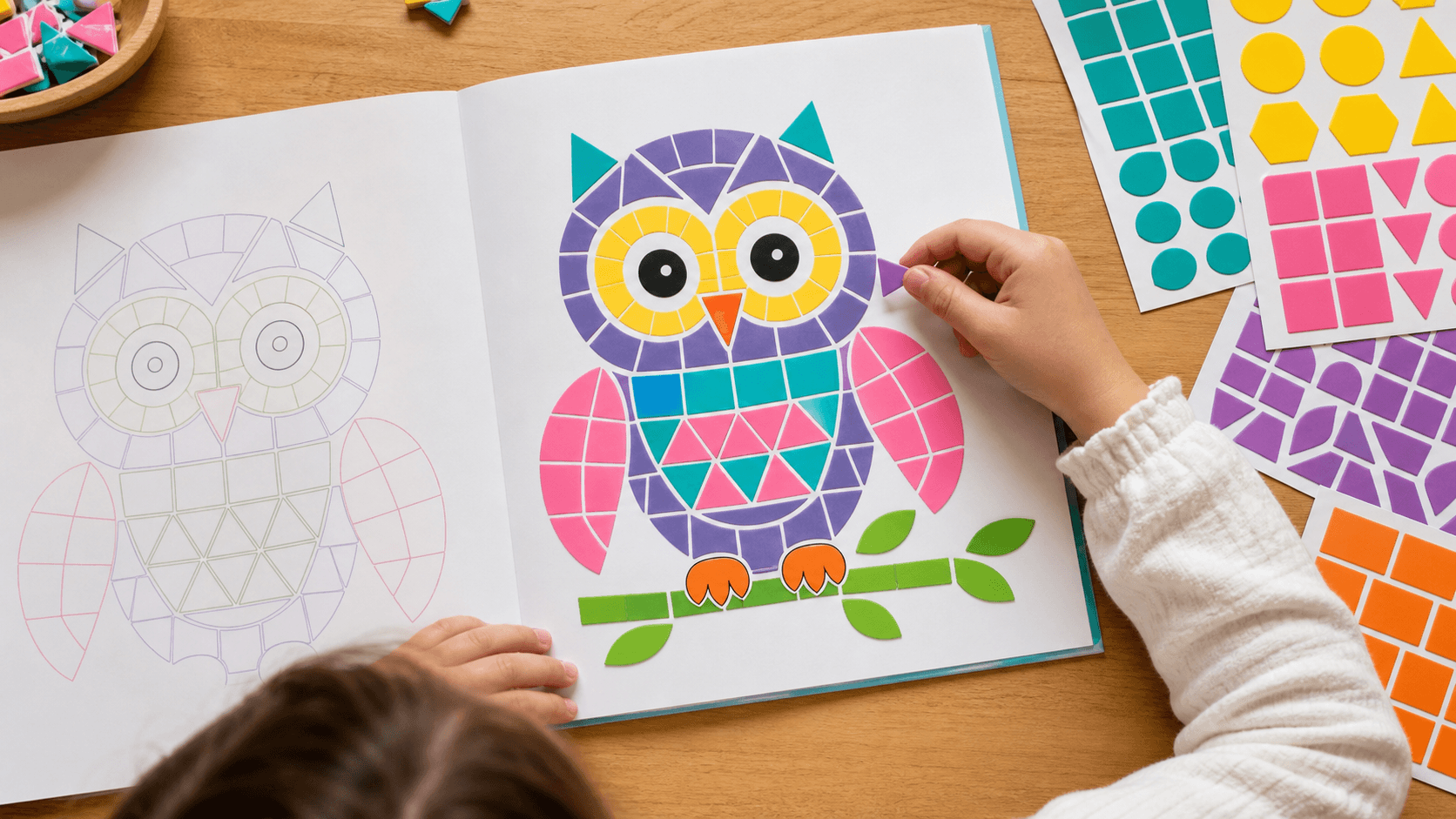
Sticker mosaics are picture-building activities. Children place stickers onto a template to reveal an image. The system may use numbered placement, color matching, shape matching, or pixel-style grids. Unlike free-form collage, the joy comes from structure, progress, and the moment the final image appears.
For wholesale or custom production, write down the intended user, destination market, quantity, packaging style, and any test requirements before artwork begins. This keeps design decisions connected to real buying conditions instead of guesswork.
Choose the right challenge level
Difficulty is controlled by sticker count, shape variety, color similarity, page size, and the precision required by the outline. Beginner pages should use fewer, larger pieces and obvious color differences. Advanced pages can use more pieces, closer shades, and tighter placement areas.
For wholesale or custom production, write down the intended user, destination market, quantity, packaging style, and any test requirements before artwork begins. This keeps design decisions connected to real buying conditions instead of guesswork.
Design the placement system
A good key reduces frustration. Numbering, color coding, shape icons, and visible outlines all help. Leave room for small mistakes. If one misplaced sticker ruins the page, the activity may feel punishing rather than playful. For younger children, progress should be visible after only a few placements.
For wholesale or custom production, write down the intended user, destination market, quantity, packaging style, and any test requirements before artwork begins. This keeps design decisions connected to real buying conditions instead of guesswork.
Prototype before printing bulk quantities
Test with real users before production. Watch whether children can peel pieces, understand the key, complete a page without adult explanation, and feel satisfied by the reveal. Production teams should also confirm sheet spacing, die-cut tolerance, and whether similar colors remain distinguishable after printing.
For wholesale or custom production, write down the intended user, destination market, quantity, packaging style, and any test requirements before artwork begins. This keeps design decisions connected to real buying conditions instead of guesswork.
Planning table
| Level | Sticker count | Design approach |
|---|---|---|
| Beginner | 20–40 pieces | Large shapes, bold colors, simple animal or vehicle image |
| Intermediate | 50–100 pieces | More colors, smaller shapes, clear numbered key |
| Advanced | 120+ pieces | Complex reveal image, tighter placement, careful color matching |
Buyer checklist
- Define the user age range and supervision context.
- Confirm product format, sheet size, piece count, and packaging.
- Avoid safety, waterproof, washable, food-contact, or skin-contact claims without test evidence.
- Prepare original or properly licensed artwork.
- Request a proof or sample before bulk production.
Related StickerJaki guides
- /stickers-for-kids-crafts/
- /sticker-sheet-layout-guide/
- /custom-shape-stickers/
- /die-cut-vs-kiss-cut-stickers/
FAQ
What is a sticker mosaic activity?
It is a structured activity where stickers are placed on a template to build a final picture.
What age is best for sticker mosaics?
Age ranges are only starting points. Piece size, peel difficulty, and visual complexity matter more than age alone.
Which shapes work best?
Squares and triangles are efficient, while circles and irregular pieces can feel more playful but may need more careful layout.
Can sticker mosaics support fine-motor practice?
They can provide matching and placement practice, but developmental benefits should not be guaranteed.
What should a prototype include?
Include the sticker sheet, placement page, instructions, and packaging sample for real-use testing.