This guide is written for buyers, parents, educators, publishers, and children’s product teams who want a practical way to plan nature scavenger hunt stickers without overpromising performance or safety. The goal is to make the product easier to use, easier to source, and clearer for the final customer.
How the activity works
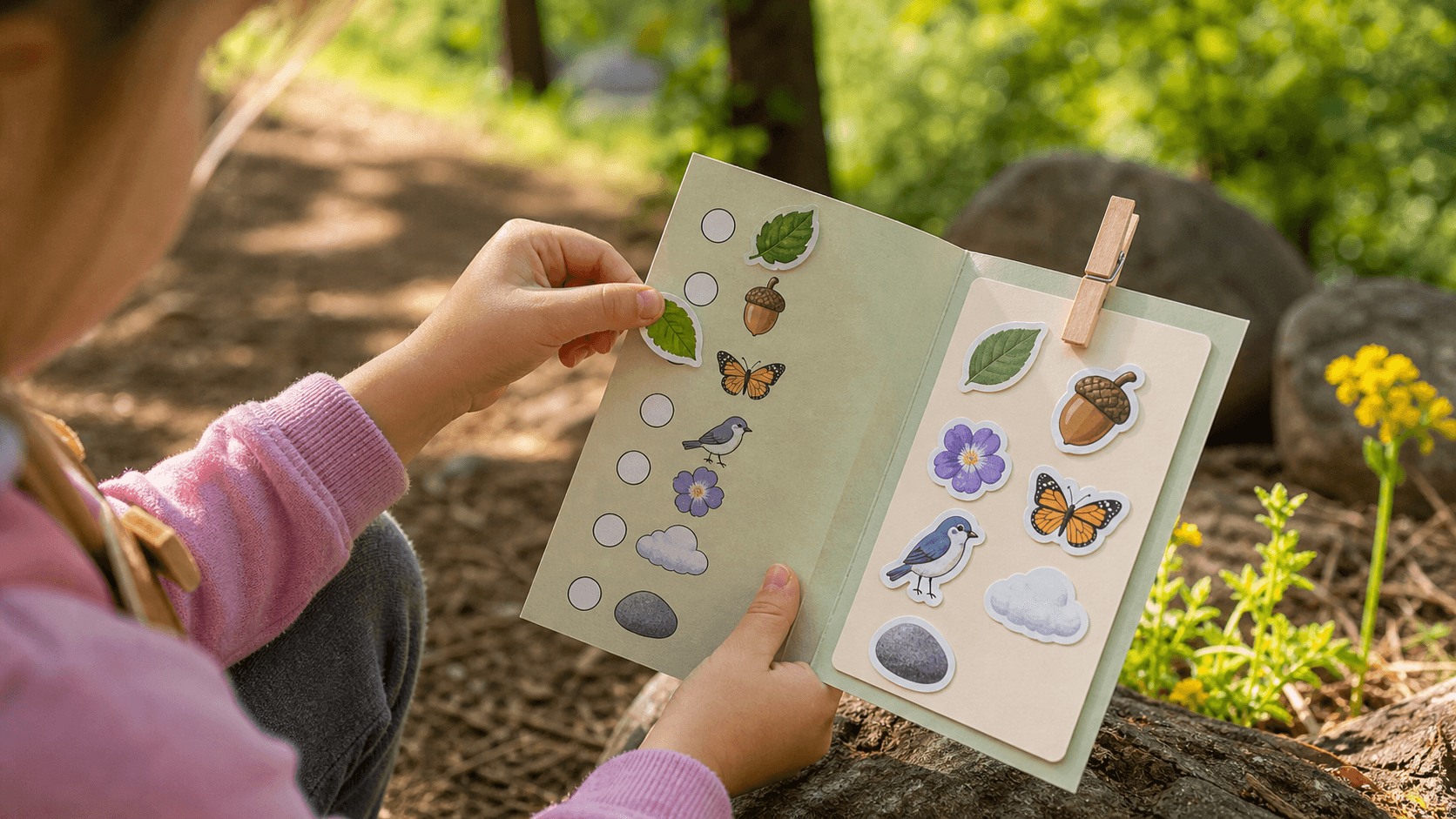
Children observe, identify, place a sticker, compare findings, and record what they noticed. The goal is not to remove leaves, insects, shells, or flowers from the environment. It is to look carefully and celebrate discovery.
For wholesale or custom production, write down the intended user, destination market, quantity, packaging style, and any test requirements before artwork begins. This keeps design decisions connected to real buying conditions instead of guesswork.
Choose a theme by location
Backyard kits can include clouds, leaves, birds, flowers, rocks, and garden tools. Forest kits may include bark patterns, mushrooms, animal tracks, and different leaf shapes. Beach kits can focus on shells, tide marks, seaweed, weather, and responsible observation. Seasonal versions keep the same format fresh throughout the year.
For wholesale or custom production, write down the intended user, destination market, quantity, packaging style, and any test requirements before artwork begins. This keeps design decisions connected to real buying conditions instead of guesswork.
Pick the right format
A checklist card is simple and low-cost. A fold-out trail map feels more adventurous. A field booklet gives space for drawing, writing, and repeat visits. For camps, visitor centers, hotels, and museums, the format should match the length of the program and how much staff guidance is available.
For wholesale or custom production, write down the intended user, destination market, quantity, packaging style, and any test requirements before artwork begins. This keeps design decisions connected to real buying conditions instead of guesswork.
Plan for outdoor conditions
Outdoor packs need easy storage, weather-aware materials, and simple instructions. Include reminders about supervision, site rules, allergies, sun protection, and “look, don’t disturb” behavior. If species identification matters, have experts review the content before printing.
For wholesale or custom production, write down the intended user, destination market, quantity, packaging style, and any test requirements before artwork begins. This keeps design decisions connected to real buying conditions instead of guesswork.
Planning table
| Theme | Sample hunt items | Best setting |
|---|---|---|
| Backyard | Leaf shape, bird, flower color, garden tool | Home or school garden |
| Forest | Bark texture, animal track, moss, pine cone | Camp or nature trail |
| Beach | Shell shape, tide line, cloud type, seaweed | Coastal activity |
| Weather | Cloud, wind sign, shadow, puddle | Seasonal lesson |
Buyer checklist
- Define the user age range and supervision context.
- Confirm product format, sheet size, piece count, and packaging.
- Avoid safety, waterproof, washable, food-contact, or skin-contact claims without test evidence.
- Prepare original or properly licensed artwork.
- Request a proof or sample before bulk production.
Related StickerJaki guides
- /stickers-for-kids-crafts/
- /sticker-packs-guide/
- /seasonal-and-holiday-stickers-planning/
- /custom-stickers-for-events/
FAQ
Do children collect the objects?
No. The safest and most responsible version is observation-based: look, identify, and place a sticker.
Can these kits be customized for a park or camp?
Yes. Custom kits can use local themes, maps, languages, and activity rules.
Are the materials eco-friendly?
Only make eco-friendly claims when the material and disposal route are documented.
What should be inside the pack?
A sticker sheet, checklist or booklet, simple rules, storage envelope, and optional pencil.
Who should approve nature facts?
Use an educator, naturalist, or subject expert when species accuracy matters.


