Kids Window Clings: Reusable Play on Glass is written for Parents, childcare providers, retailers, and family brands comparing reusable window clings with ordinary adhesive stickers. The goal is to turn a broad idea into a practical sticker product that can be designed, tested, packaged, and ordered with fewer surprises.
Instead of treating kids window clings as a generic craft item, this guide looks at format, artwork, surface choice, child handling, packaging, and buyer questions. It is especially useful when comparing static cling stickers, toddler window stickers, reusable glass stickers for retail, education, events, or branded programs.
Use cases for windows, glass doors, mirrors, classrooms, storefront family areas, and seasonal displays.
A strong product starts by defining the play moment before choosing artwork. For kids window clings, the buyer needs to understand who will use the stickers, where the activity happens, and what the finished pack should help children do.
When developing static cling stickers, compare the child’s age, handling ability, supervision setting, and storage method. This makes the product easier for parents, schools, retailers, and distributors to evaluate before production.
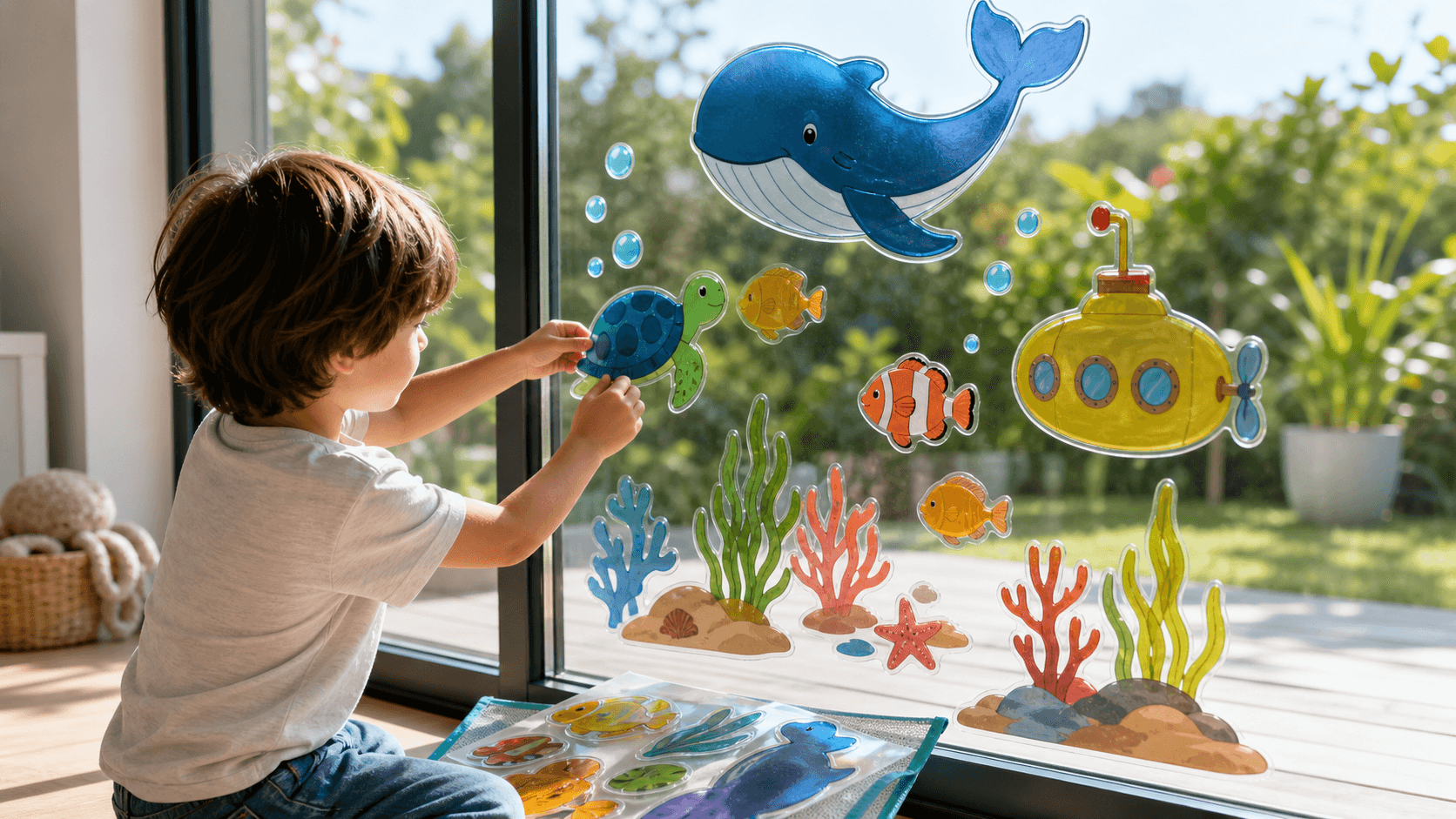
Design a scene set using backgrounds, characters, props, scale, visibility from both sides, and storage sheets.
For wholesale planning, this section matters because it affects size, material, page count, packaging, and testing. A design that looks charming on screen can still fail if pieces are too small, prompts are unclear, or the surface does not match the intended use.
When developing toddler window stickers, compare the child’s age, handling ability, supervision setting, and storage method. This makes the product easier for parents, schools, retailers, and distributors to evaluate before production.
Performance factors: clean glass, temperature, sunlight, dust, edge lift, color transfer, and repeated handling.
Keep the artwork original, easy to understand, and matched to the market. Retail packs, classroom kits, and event giveaways can use the same theme family, but they usually need different counts, instructions, and packaging formats.
When developing reusable glass stickers, compare the child’s age, handling ability, supervision setting, and storage method. This makes the product easier for parents, schools, retailers, and distributors to evaluate before production.
Clear vs white cling and when each supports readable artwork.
A strong product starts by defining the play moment before choosing artwork. For kids window clings, the buyer needs to understand who will use the stickers, where the activity happens, and what the finished pack should help children do.
When developing static cling stickers, compare the child’s age, handling ability, supervision setting, and storage method. This makes the product easier for parents, schools, retailers, and distributors to evaluate before production.
Product Planning Table
| Decision | What to Check | Why It Matters |
|---|---|---|
| Audience | Age band, supervision, setting, and buyer type | Keeps artwork, size, and packaging realistic |
| Format | Sheet, mini book, kit, roll, scene set, or retail pack | Changes cost, shelf presentation, and user experience |
| Material | Surface, adhesive or cling type, finish, and handling | Affects durability, removal, and compatibility |
| Artwork | Original theme, color contrast, spacing, and cut clearance | Improves readability and reduces production problems |
| Packaging | Header card, bag, carton, instructions, and language | Helps retail buyers understand the product quickly |
Prototype Checklist
- Confirm the primary keyword and buyer intent: kids window clings.
- Prepare artwork at final size and check that small details remain readable.
- Test the intended surface or use setting before making performance claims.
- Review age grade, small-part risks, supervision notes, and destination-market rules.
- Check packaging copy, barcode needs, language versions, and carton information.
- Request a physical proof before approving bulk production.
Related Sticker Guides
- wall stickers vs decals vs wallpaper
- sticker adhesives explained
- best surfaces for stickers
- non toxic stickers for kids
How to Start a Custom Order
Invite buyers to specify glass type, visibility needs, age grade, scene size, packaging, and required testing. A clear brief helps the supplier recommend artwork structure, material, sheet size, packing method, sample process, and production schedule.
If you are comparing window cling activity for children, prepare reference goals rather than copied artwork. Original artwork and confirmed production tests are the safer route for long-term retail and educational programs.
FAQ
What are kids window clings?
Kids Window Clings are child-focused sticker products designed around a specific play, learning, decorating, or collecting use case rather than only decoration.
What should buyers confirm before ordering?
Confirm age range, sticker size, material, artwork style, packaging, quantity, destination market, and any testing or compliance requirements.
Can these stickers be customized?
Yes. Artwork, sheet layout, packaging, language, and assortment can usually be adjusted once the final product format and production quantity are confirmed.
Are these stickers safe for young children?
Safety depends on material, size, construction, age grading, and local rules. Adult supervision and product-specific testing are important, especially for small pieces.
How should retailers choose a format?
Choose the format based on where the product will be sold or used: retail shelf packs, classroom kits, event giveaways, activity books, or seasonal bundles.
{“@context”:”https://schema.org”,”@type”:”FAQPage”,”mainEntity”:[{“@type”:”Question”,”name”:”What are kids window clings?”,”acceptedAnswer”:{“@type”:”Answer”,”text”:”Kids Window Clings are child-focused sticker products designed around a specific play, learning, decorating, or collecting use case rather than only decoration.”}},{“@type”:”Question”,”name”:”What should buyers confirm before ordering?”,”acceptedAnswer”:{“@type”:”Answer”,”text”:”Confirm age range, sticker size, material, artwork style, packaging, quantity, destination market, and any testing or compliance requirements.”}},{“@type”:”Question”,”name”:”Can these stickers be customized?”,”acceptedAnswer”:{“@type”:”Answer”,”text”:”Yes. Artwork, sheet layout, packaging, language, and assortment can usually be adjusted once the final product format and production quantity are confirmed.”}},{“@type”:”Question”,”name”:”Are these stickers safe for young children?”,”acceptedAnswer”:{“@type”:”Answer”,”text”:”Safety depends on material, size, construction, age grading, and local rules. Adult supervision and product-specific testing are important, especially for small pieces.”}},{“@type”:”Question”,”name”:”How should retailers choose a format?”,”acceptedAnswer”:{“@type”:”Answer”,”text”:”Choose the format based on where the product will be sold or used: retail shelf packs, classroom kits, event giveaways, activity books, or seasonal bundles.”}}]}