
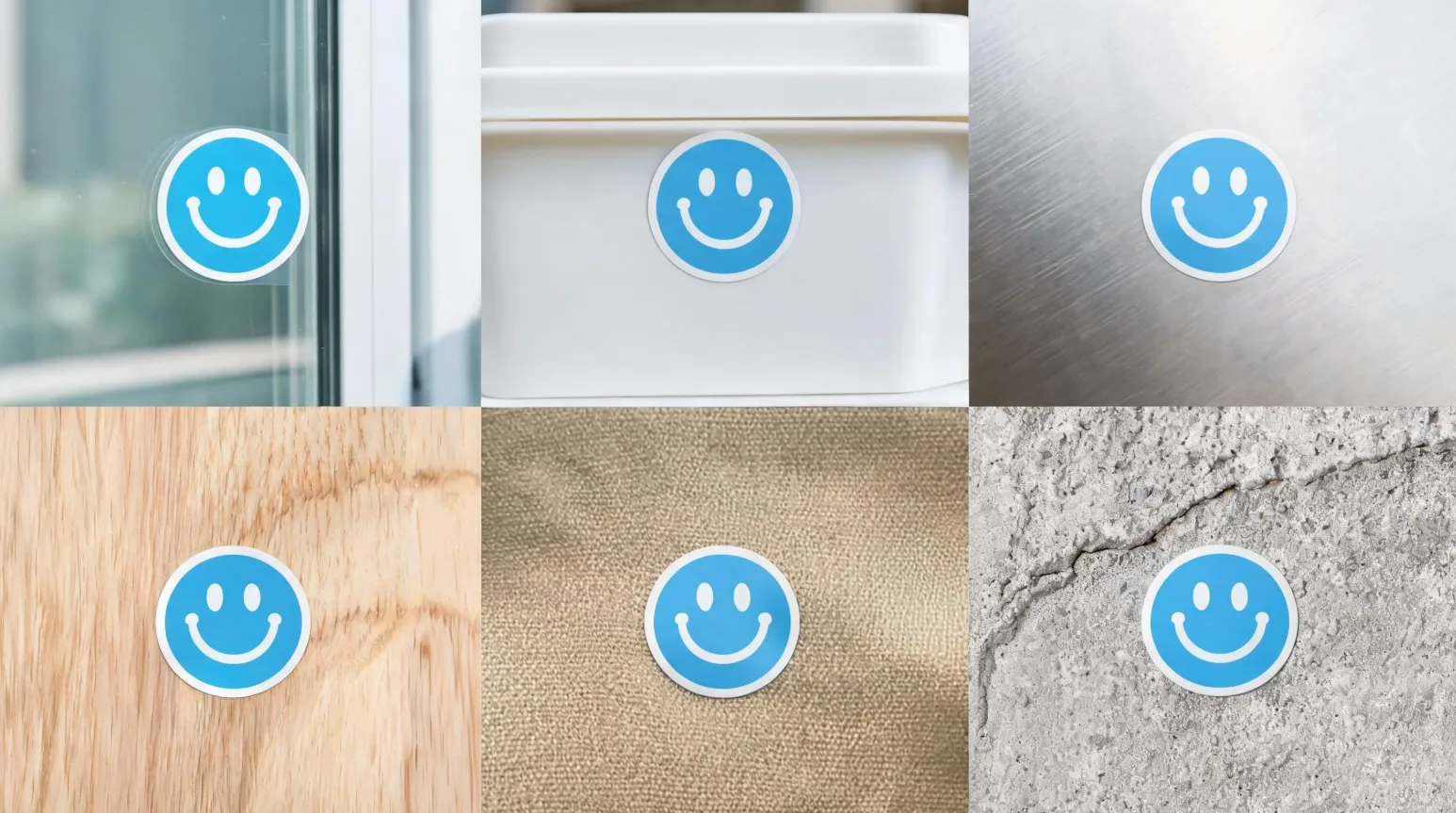
Stickers stick best to smooth, clean, non-porous surfaces like glass and sealed plastic, and worst to silicone, rough texture, and anything oily or dusty. Knowing where your sticker is going lets you pick the right material and adhesive from the start. Here’s the surface-by-surface breakdown.
What makes a surface sticker-friendly?
Three properties. Smoothness: adhesive needs full contact, and texture leaves air gaps. Surface energy: high-energy materials like glass and metal attract adhesive; low-energy ones like silicone and some plastics repel it. Cleanliness: dust, grease, and old residue prevent any adhesive from bonding, no matter how good it is.
Surface adhesion at a glance
| Surface | Adhesion | Tips |
|---|---|---|
| Glass | Excellent | Clean with alcohol; ideal for windows and jars |
| Smooth plastic (PET, acrylic) | Excellent | Wipe first; avoid softened or oily plastics |
| Powder-coated metal | Good | Slightly textured; use a stronger permanent adhesive |
| Sealed wood | Good | Raw wood is porous; seal or varnish first |
| Fabric | Poor | Adhesive won’t hold; use an iron-on transfer instead |
| Silicone | Very poor | Nothing sticks reliably; avoid |
| Textured walls | Poor to fair | Smooth paint works; textured plaster does not |
Best surfaces for long-lasting adhesion
Glass, sealed plastic, painted metal, and smooth painted walls give the most reliable bond. These are the surfaces where a quality vinyl sticker with the right adhesive will still look perfect years later. Water bottles, laptops, car bodywork, windows, and packaging all fall into this group — which is why they dominate sticker use cases.
Tricky surfaces and how to handle them
- Powder-coated metal: lightly textured. Choose a permanent adhesive and press firmly for longer.
- Raw or unsealed wood: porous, so adhesive soaks in and edges lift. Seal the surface first.
- Curved bottles and helmets: use a smaller sticker, or a conformable vinyl that flexes without wrinkling.
- Cold surfaces: adhesive bonds poorly below room temperature. Warm the surface first.
- Freshly painted walls: wait at least two weeks for the paint to fully cure.
Surfaces to avoid
Silicone (phone cases, bakeware) repels adhesive by design — nothing sticks reliably. Fabric flexes and breathes, so an adhesive sticker peels within a day; use a heat transfer instead, as covered in our iron-on stickers guide. Heavily textured plaster, brick, and unsealed concrete leave too many air gaps. Oily or waxy surfaces need degreasing before anything will hold.
How surface prep improves any bond
Almost every “the sticker won’t stick” problem is a preparation problem. Wipe the surface with isopropyl alcohol, let it dry fully, apply at room temperature, and press from the centre outward to push out air. Then leave it a day before exposing it to water. For technique, see how to apply stickers without bubbles; to match the adhesive itself to the job, read sticker adhesives explained.
Frequently asked questions
What surfaces do stickers stick to best?
Smooth, clean, non-porous surfaces: glass, sealed plastic, painted metal, and smooth painted walls.
Will stickers stick to powder-coated metal?
Yes, with a strong permanent adhesive and firm pressure — the slight texture reduces contact area.
Do stickers work on silicone?
No. Silicone has very low surface energy and repels adhesive.
Do stickers stick to fabric?
Not durably. Use an iron-on heat transfer for fabric and apparel.
Why won’t my sticker stick to a textured wall?
Texture creates air gaps so the adhesive only touches the high points. Smooth painted walls work far better.
Tell us where your sticker is going — we’ll match the right material and adhesive.