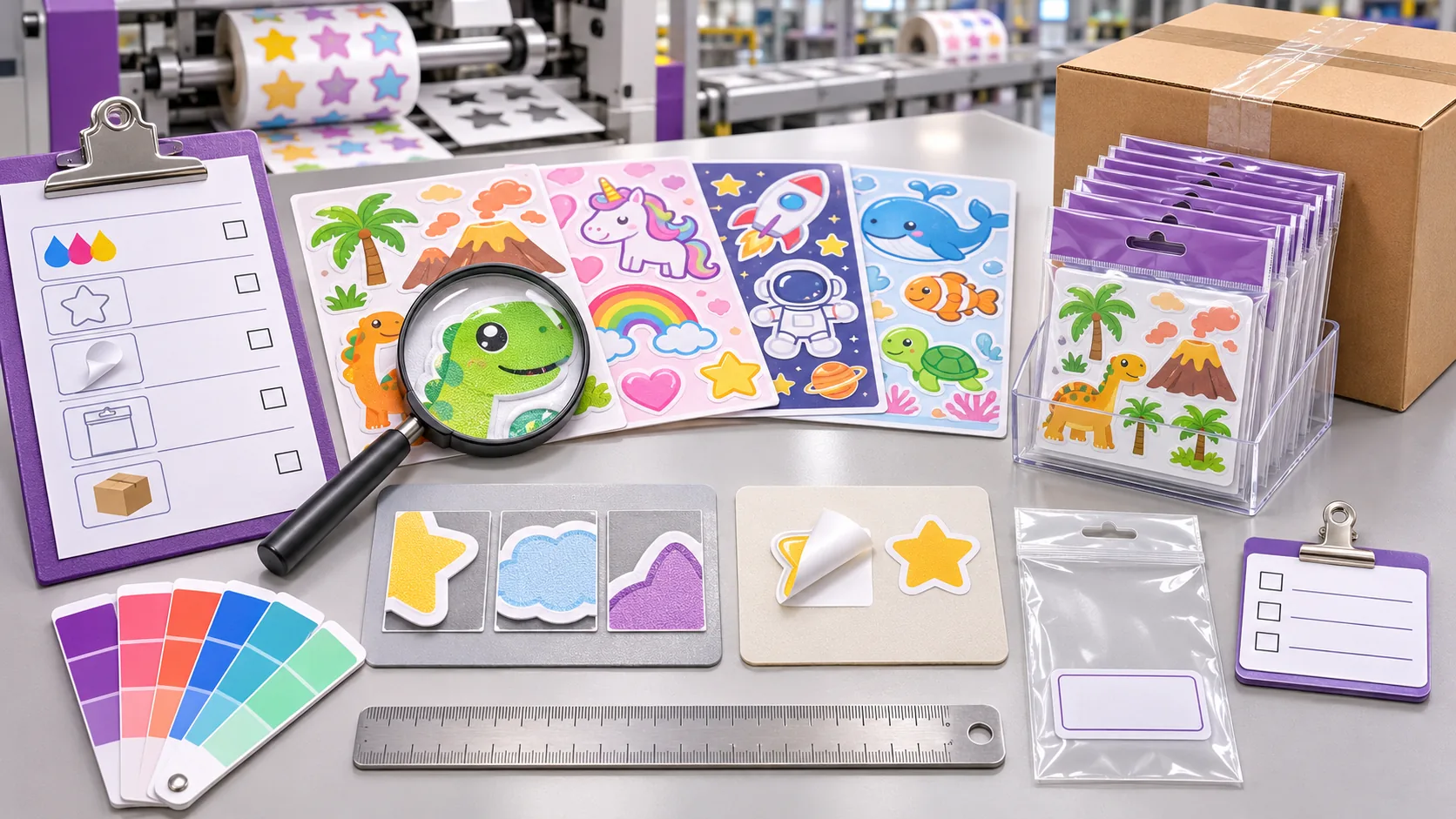
A written wholesale sticker quality checklist gives buyers and suppliers one reference for sample review, production control, and pre-shipment inspection. The approved sample and specification should be the baseline. A photograph or product name alone cannot define dimensions, color, adhesive behavior, packaging, and acceptable variation.
Prepare the inspection references
Before inspecting, collect the purchase order, approved artwork, approved physical sample or signed proof, product specification, packaging specification, barcode data, assortment plan, carton marks, and agreed inspection rules. Record the version and date of each reference. If two documents conflict, resolve the conflict before judging the goods.
Check dimensions, shape, material, and quantity
Measure the product and selling unit using the agreed method. Confirm sheet size, sticker shape, layout, count, assortment, and pack quantity. Material and construction should match the approved specification; do not identify an unknown material only by appearance. Count checks should cover the retail unit, inner pack, and master carton where applicable.
Review printing and artwork
Compare the print with the approved reference under consistent lighting. Check artwork version, text, spelling, logo, barcode, color consistency, registration, fine details, and legibility. Look for missing print, spots, banding, scratches, smearing, contamination, or unintended color shifts. Small visual differences can come from material and process, so buyers should agree the comparison method and acceptable limits before production.
Inspect die-cut and kiss-cut quality
Check whether the cut follows the approved shape, whether borders are consistent, and whether the sticker separates without tearing the design or backing. Look for rough edges, incomplete cuts, excessive cutting into the liner, loose pieces, or shifted cut lines. Test several positions on the sheet rather than only one easy sample.
Test adhesive on the intended surface
Adhesive performance depends on the sticker construction, application surface, surface cleanliness, temperature, pressure, and time. Test on the actual or representative surface using an agreed procedure. Check initial placement, edge lifting, removal behavior where relevant, and any visible residue. Avoid absolute claims such as “works on every surface” unless a defined test supports them.
Check finishes and special effects
For flat stickers, review surface finish, lamination, gloss or matte consistency, and scratches. For raised, puffy, shaker, liquid, or squishy formats, compare the approved sample for relief, fill distribution, sealed edges, deformation, leaks, trapped contamination, or inconsistent tactile effect. Construction varies by item, so the approved specification remains the authority.
| Inspection item | How to check | Compare against | Possible defect |
|---|---|---|---|
| Artwork and text | Visual comparison and legibility check | Approved artwork | Wrong version, spelling error, missing detail |
| Color and print | Review under consistent lighting | Approved sample or agreed standard | Color shift, spots, banding, poor registration |
| Dimensions and layout | Measure agreed points and count pieces | Product specification | Wrong size, position, or count |
| Cutting | Inspect edges and peel sample stickers | Approved cut line and sample | Rough, incomplete, or shifted cut |
| Adhesive | Apply using agreed surface and method | Approved test requirement | Edge lift, poor bond, unwanted residue |
| Special effect | Compare relief, movement, seal, or fill | Approved physical sample | Uneven effect, deformation, leak |
| Retail packaging | Check pack, label, barcode, warnings | Packaging proof | Wrong label, damage, unreadable code |
| Carton packing | Count units and compare assortment | Packing specification | Wrong quantity, mix, mark, or protection |
Inspect retail packaging and labels
Check that the product is oriented correctly and protected from bending, pressure, rubbing, or movement. Confirm backing cards, bags, seals, hanging holes, display boxes, barcode placement, label language, warnings, and any destination-market information. Scan barcodes with suitable equipment when barcode performance is part of acceptance.
Check inner packs and master cartons
Verify inner-pack quantity, master-carton quantity, SKU assortment, dividers or protection, carton condition, sealing, and shipping marks. Compare gross weight, carton dimensions, and carton count with the packing data. Packaging should protect the actual product construction during the intended route, especially raised or pressure-sensitive products.
Record sampling and defects
Agree the sampling plan, defect definitions, and acceptance criteria before production. There is no universal tolerance that suits every sticker product and market. During inspection, identify the sampled carton and unit, take clear photographs, record the reference requirement, describe the deviation, and count affected samples. Separate cosmetic, functional, packaging, and quantity findings so the response can be targeted.
What to do when goods do not match
Pause the acceptance decision and compare the finding with the approved reference. Confirm whether the issue is isolated or systematic, then agree containment, sorting, rework, replacement, revised packaging, or another corrective action as appropriate. Do not change the acceptance standard after seeing the result. Keep the final decision and any concession in writing.
Pre-shipment checklist
Product
- Correct SKU, artwork, dimensions, count, and assortment
- Print, cut, edges, surface, and special effect match the approved reference
- Adhesive checked on the intended surface using the agreed method
Packaging
- Correct pack format, barcode, labels, warnings, and display features
- Product protected from pressure, rubbing, bending, and movement
- Retail pack quantity and orientation are correct
Cartons
- Inner and master quantities match the packing specification
- Carton marks, assortment, dimensions, weight, and count are recorded
- Cartons are sealed and suitable for the agreed shipping route
Frequently asked questions
Why is an approved sample important?
It gives both parties a physical reference for appearance and construction. The written specification should still define details that a sample cannot prove.
How should buyers handle color differences?
Use an agreed reference, viewing condition, material, and tolerance. Resolve significant differences against the approved standard rather than personal memory.
How should sticker adhesive be tested?
Use the intended or representative surface and define preparation, pressure, temperature, dwell time, removal method, and expected result before testing.
How many units should be inspected?
The sampling plan depends on order size, risk, product complexity, and buyer requirements. Agree the plan and defect categories before production.
What happens if defects are found?
Document the deviation, determine its extent, and agree containment and corrective action before shipment. The response depends on the product, specification, and severity.
StickerJaki’s About page explains the wholesale focus, while the FAQ covers common buying questions. For a stock or custom sticker project, send the product reference, approved artwork or sample, inspection standard, packaging, quantity, destination, and delivery date through the Contact page.