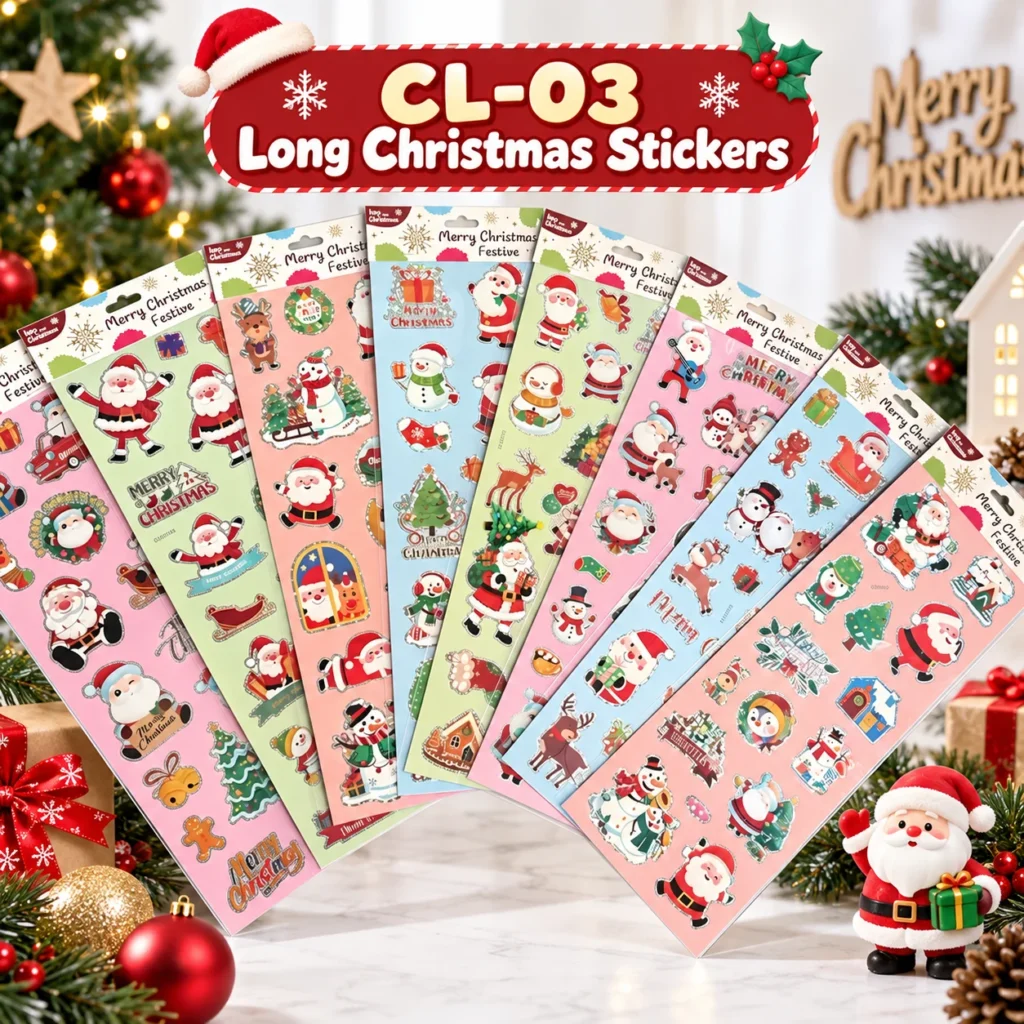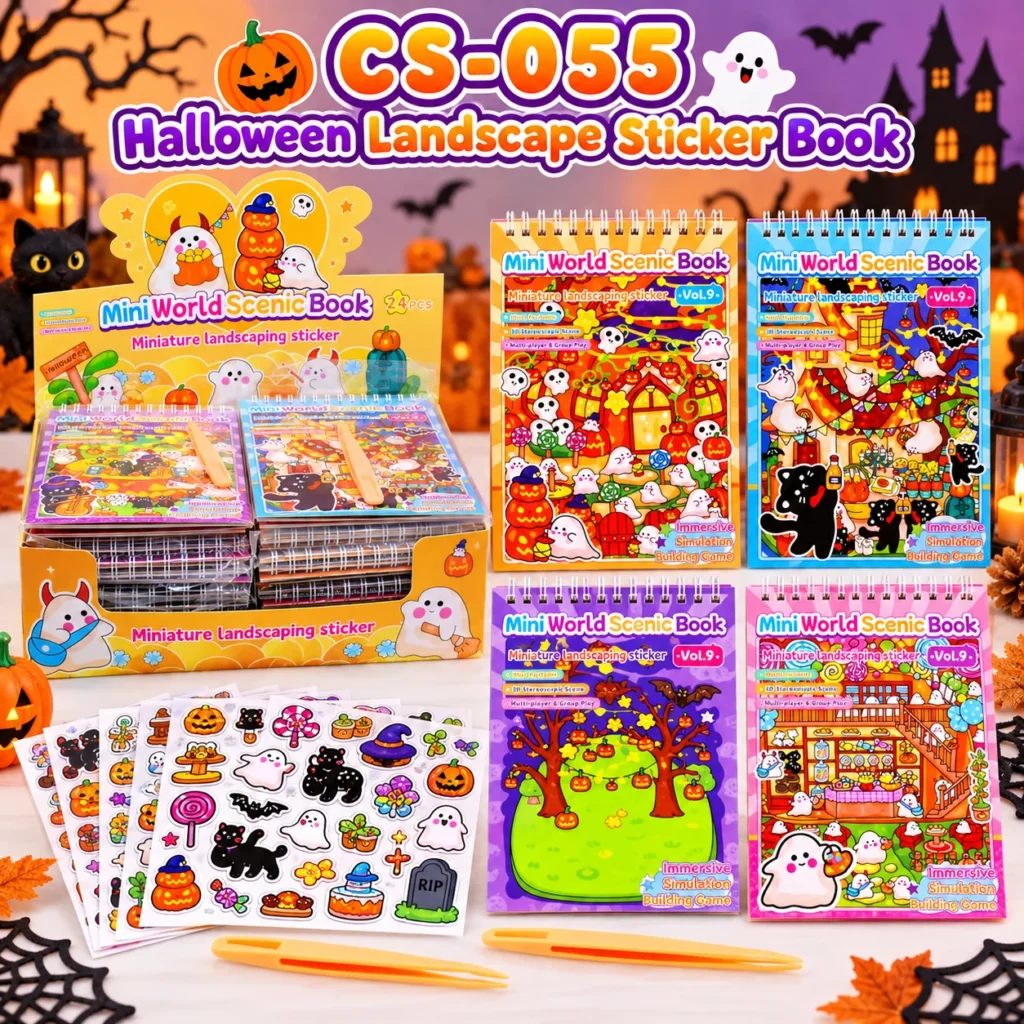

Shaker vs liquid vs squishy stickers is not merely a choice between three visual styles. Each format creates a different interaction, package profile, inspection focus, and retail expectation. Buyers should compare confirmed samples and product specifications rather than treating every raised novelty sticker as interchangeable.
What are shaker stickers?
Shaker stickers contain visible loose elements that move when the product is tilted or shaken. The moving pieces create the main visual effect, so buyers should examine movement, clarity, sealed edges, print alignment, and whether pieces become trapped in one area. Exact film, internal components, layer thickness, and sealing method depend on the selected product and must be confirmed.
What are liquid stickers?
Liquid stickers use a sealed construction in which a visible filling moves inside the product. The commercial appeal comes from flow, color, transparency, and movement. Do not assume the internal liquid or material composition from appearance. Request product-specific construction information where relevant and inspect samples for leakage, seal consistency, bubbles, discoloration, surface damage, and deformation.
What are squishy stickers?
Squishy or squeeze stickers are designed for a soft tactile response and recovery after pressure. Their value is mainly touch rather than loose internal movement. Buyers should check shape recovery, surface feel, printed-area durability, adhesive performance, thickness consistency, seam condition, and deformation after packaging. A squishy sticker is not automatically a therapeutic or medical sensory product.
| Feature | Shaker stickers | Liquid stickers | Squishy stickers | Buyer implication |
|---|---|---|---|---|
| Main interaction | Loose elements move | Visible filling flows | Product compresses and recovers | Choose the experience the shopper should understand immediately |
| Visual focus | Movement and particles | Flow, color, and clarity | Raised shape and softness | Photography and display should show the correct benefit |
| Inspection focus | Seal, movement, trapped pieces | Leakage, bubbles, seal, discoloration | Recovery, deformation, surface condition | Use a format-specific checklist |
| Packaging need | Protect raised sealed areas | Protect from pressure and puncture | Reduce compression and shape distortion | Confirm inner-pack and carton protection |
| Cost drivers | Construction, size, moving fill, packaging | Construction, filling, seal, inspection | Thickness, shape, tactile construction, packaging | Quote a confirmed specification |
Retail channel and shopper considerations
Novelty formats can work in toy, stationery, gift, party, reward, and seasonal assortments, but the right choice depends on age group, selling price, display method, and shopper expectation. Shaker products communicate movement visually. Liquid styles can create a strong demonstration effect. Squishy products depend more on tactile access or clear packaging communication. Review the wider kids stickers wholesale range before building a mixed assortment.
Incoming-inspection checklist
- Compare product identity, design, color, dimensions, and quantity with the approved sample.
- Inspect seams and edges for openings, lifting, or irregular sealing.
- Check leakage, moisture, residue, or visible damage where relevant.
- Test movement, flow, squeeze response, and recovery on a defined sample.
- Review print alignment, scratches, dents, deformation, and surface contamination.
- Check adhesive, backing, peel behavior, and packaging condition.
- Record defect examples by carton and production lot.
Packaging and carton protection
Raised novelty products can be more sensitive to pressure than flat sticker sheets. Confirm whether individual pieces need a backing card, tray, blister, protective bag, or spacing. Inner packs should limit rubbing and migration. Master cartons should reduce compression, puncture, excessive movement, and heat or moisture exposure appropriate to the shipping route.
Packaging-protection checklist
- Confirm product orientation and pieces per inner pack.
- Prevent heavy products from pressing directly on raised surfaces.
- Check bag, card, tray, or blister dimensions against the product.
- Use carton dividers or spacing when the approved pack requires them.
- Review carton quantity, gross weight, dimensions, and stacking pattern.
- Repeat a visual inspection after a representative transport test when required.
Age grading, warnings, and documents
Age grading and document needs depend on intended use, construction, packaging, and destination market. Buyers should provide the target country and age group, then confirm applicable warnings, labels, and requested testing scope. Do not assume that one report covers every novelty format or that a tactile product is suitable for every age.
Choosing one format or a mixed assortment
Select one format when the retail concept needs a clear, consistent interaction. Use a mixed assortment when the channel can explain several formats and the order supports sensible display and replenishment. Confirm availability, exact construction, packaging, MOQ, testing, price, and production timing for each selected item. Standard StickerJaki wholesale orders currently use carton-based ordering and a US$200 MOV.
Frequently asked questions
What is the main difference between the three formats?
Shaker stickers move loose elements, liquid stickers show a flowing sealed filling, and squishy stickers compress and recover.
Can shaker or liquid stickers leak?
Any sealed construction should be inspected for damage and seal integrity. Product-specific performance must be confirmed from samples and order evidence.
Do these stickers need special packaging?
They often need protection from pressure, rubbing, puncture, or deformation based on the actual construction.
Are novelty stickers suitable for every age?
No. Review intended use, age grading, components, warnings, packaging, and destination requirements.
Can the formats be custom branded?
Branding, artwork, packaging, quantities, testing, and timing depend on the confirmed custom specification.
For a quotation, send the preferred format, themes, age group, quantity, packaging, destination, and required delivery date. Review the Custom page, FAQ, or Contact page.