This guide is written for buyers, parents, educators, publishers, and children’s product teams who want a practical way to plan scented stickers for kids without overpromising performance or safety. The goal is to make the product easier to use, easier to source, and clearer for the final customer.
How scented stickers work at a high level
Many scratch-and-sniff products rely on fragrance that is released by rubbing a coated area. The exact manufacturing method depends on supplier capability and should not be assumed from the finished look. Buyers should request samples before approving a bulk order.
For wholesale or custom production, write down the intended user, destination market, quantity, packaging style, and any test requirements before artwork begins. This keeps design decisions connected to real buying conditions instead of guesswork.
Match scent to theme responsibly
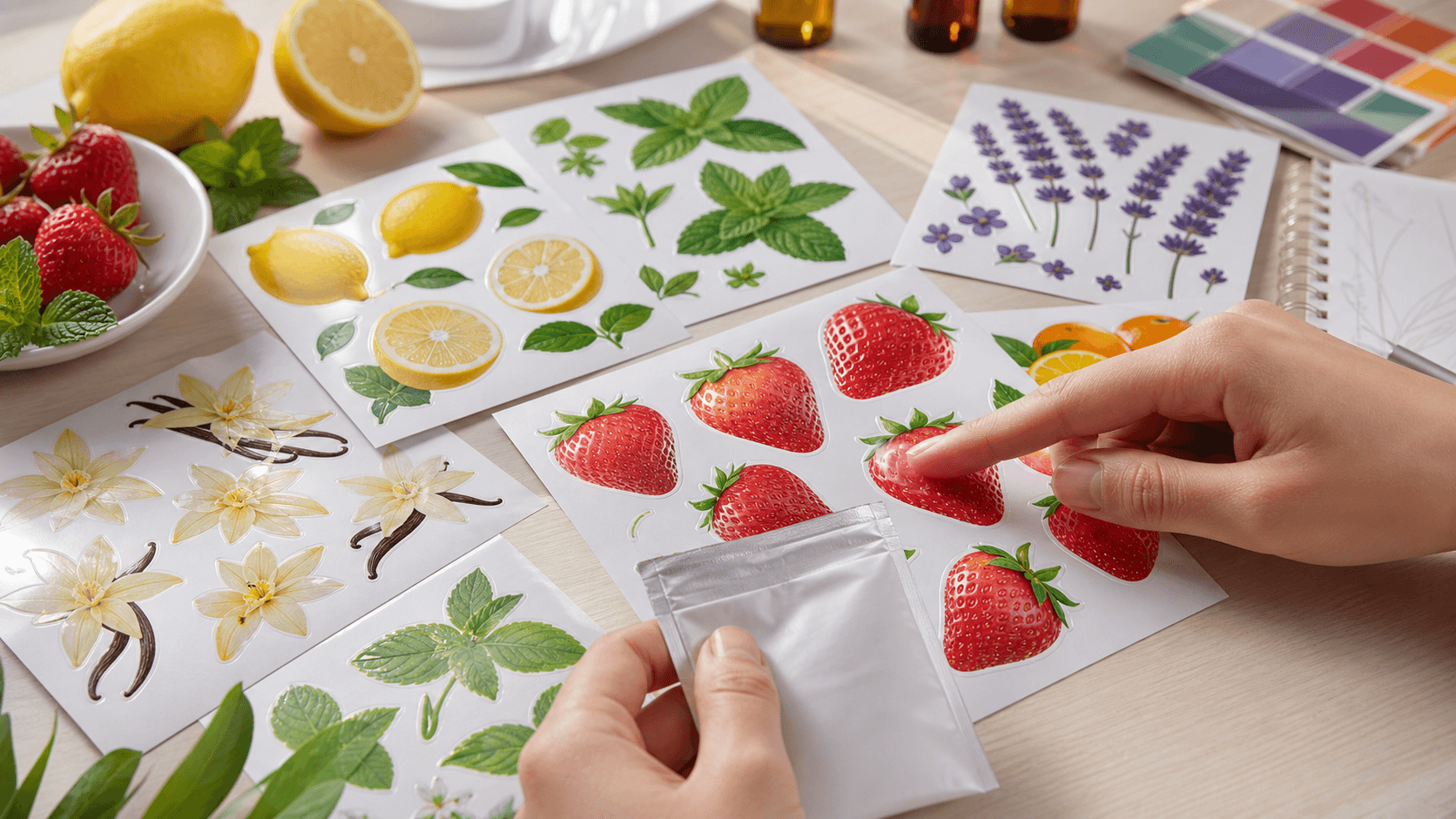
Fruit, flowers, candy, bakery, forest, and ocean concepts can support storytelling. For very young children, avoid designs that make a sticker look like edible candy or food. Scent should enhance the product, not create confusion.
For wholesale or custom production, write down the intended user, destination market, quantity, packaging style, and any test requirements before artwork begins. This keeps design decisions connected to real buying conditions instead of guesswork.
Design and packaging considerations
The scented area, rub zone, artwork, scent strength, shelf life, packaging barrier, and storage conditions all matter. A scent that smells strong on day one may fade after shipping or storage. Packaging should be tested with the actual product.
For wholesale or custom production, write down the intended user, destination market, quantity, packaging style, and any test requirements before artwork begins. This keeps design decisions connected to real buying conditions instead of guesswork.
When unscented is better
Unscented stickers may be a better choice for classrooms, broad retail programs, sensitive users, or markets with strict fragrance requirements. Do not claim hypoallergenic, non-toxic, food-safe, or age suitability without documentation.
For wholesale or custom production, write down the intended user, destination market, quantity, packaging style, and any test requirements before artwork begins. This keeps design decisions connected to real buying conditions instead of guesswork.
Planning table
| Scent family | Possible theme | Testing question |
|---|---|---|
| Fruit | Reward sheets or summer scenes | Does it smell too food-like? |
| Floral | Garden, fairy, nature kits | Is the scent too strong indoors? |
| Bakery | Party or pretend-play stickers | Is labeling clear enough? |
| Forest | Outdoor activity pack | Does the scent last in packaging? |
Buyer checklist
- Define the user age range and supervision context.
- Confirm product format, sheet size, piece count, and packaging.
- Avoid safety, waterproof, washable, food-contact, or skin-contact claims without test evidence.
- Prepare original or properly licensed artwork.
- Request a proof or sample before bulk production.
Related StickerJaki guides
- /sticker-trends-through-the-decades/
- /non-toxic-stickers-for-kids/
- /sticker-printing-methods-compared/
- /custom-stickers-for-packaging/
FAQ
Are scented stickers safe for children?
Safety depends on materials, fragrance, age grade, labeling, and market requirements. Ask for documentation before making claims.
What is scratch and sniff?
It usually refers to a scented area that releases fragrance when rubbed.
How long does the scent last?
Shelf life varies and should be tested with the final packaging and storage conditions.
Can scented stickers be used in classrooms?
They can, but fragrance sensitivities and school rules should be considered.
What should buyers confirm first?
Confirm market, age grade, scent concept, format, quantity, packaging, and required testing.