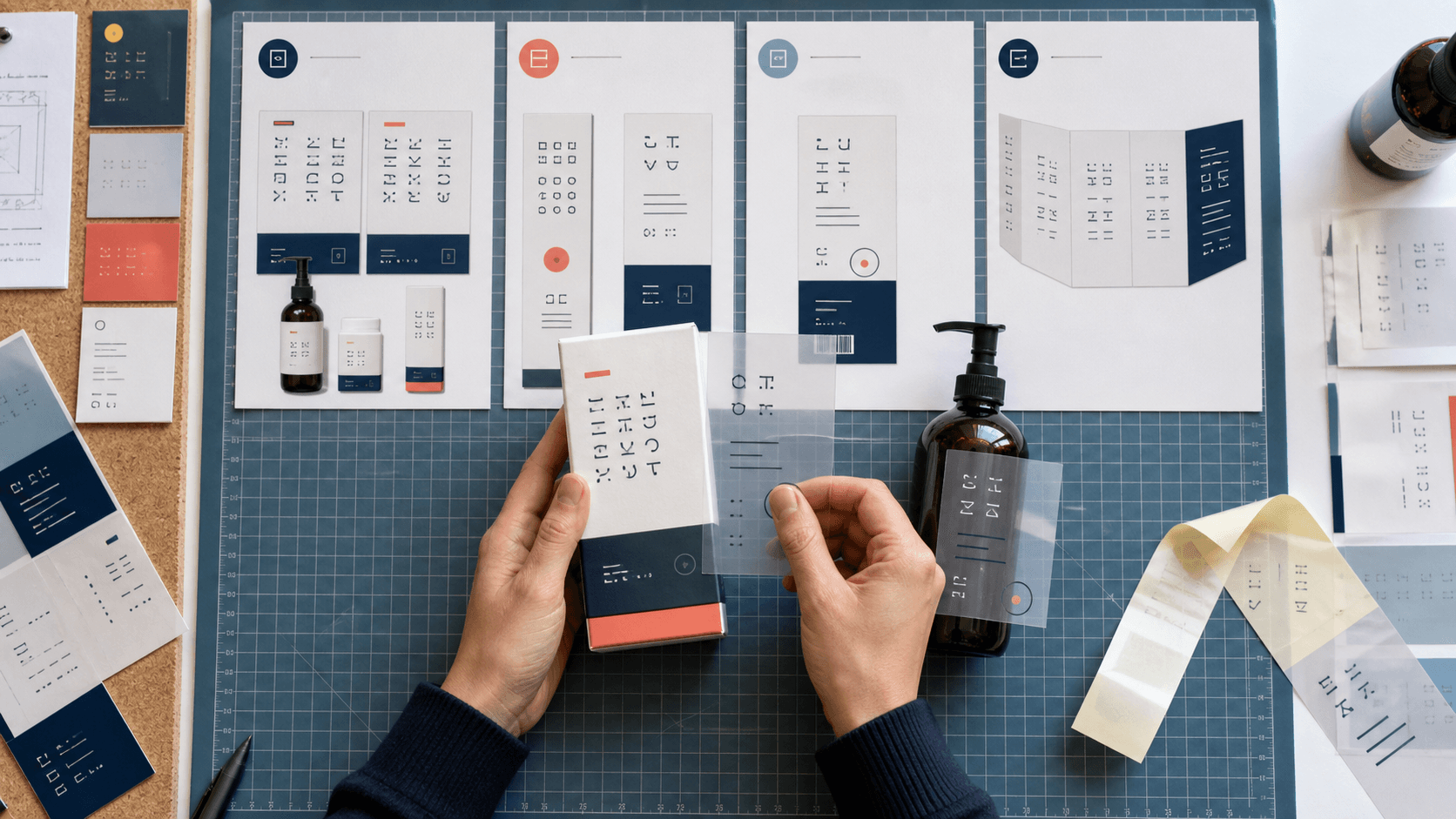
Multilingual Label Design: How to Fit More Languages Without Creating Clutter is mainly a production decision, not just a design choice. For multilingual label design, the right answer depends on the package surface, handling environment, artwork priorities, proofing method, and how the product will be reordered later.
Why translated text rarely fits the original layout
Why translated text rarely fits the original layout matters because multilingual label design has to survive real production conditions, not only look good in a mockup. Start with the product use case, the customer touchpoint, and the environment where the sticker or label will be applied.
For Multilingual Label Design: How to Fit More Languages Without Creating Clutter, the practical question is what the buyer needs to verify before approval. Material, finish, adhesive, size, print quality, and version control should all be checked against the final package instead of being treated as separate afterthoughts.
A useful brief should mention the production details that affect the result: Primary: multilingual label design, bilingual product labels Secondary: packaging translation layout, multi language stickers, global product label design Long-tail: how to fit multiple languages on a small label, bilingual packaging design tips, label layout for international markets USPs to embed carefully: multi-language artwork versioning, small-text print review, multiple-SKU production only if confirmed Format: Information-design guide for exporters and brands serving multilingual customer The goal is not to overload the supplier with random notes, but to give enough context for a precise proof and a smoother reorder.
Choose one multilingual structure
Choose one multilingual structure matters because multilingual label design has to survive real production conditions, not only look good in a mockup. Start with the product use case, the customer touchpoint, and the environment where the sticker or label will be applied.
For Multilingual Label Design: How to Fit More Languages Without Creating Clutter, the practical question is what the buyer needs to verify before approval. Material, finish, adhesive, size, print quality, and version control should all be checked against the final package instead of being treated as separate afterthoughts.
A useful brief should mention the production details that affect the result: Primary: multilingual label design, bilingual product labels Secondary: packaging translation layout, multi language stickers, global product label design Long-tail: how to fit multiple languages on a small label, bilingual packaging design tips, label layout for international markets USPs to embed carefully: multi-language artwork versioning, small-text print review, multiple-SKU production only if confirmed Format: Information-design guide for exporters and brands serving multilingual customer The goal is not to overload the supplier with random notes, but to give enough context for a precise proof and a smoother reorder.
Multilingual Label Layout Table
| Layout tool | Benefit | Risk | Control |
|---|---|---|---|
| Language grouping | Easy scanning | Uneven space | Use consistent order |
| Icon support | Reduces text load | Ambiguous icons | Pair with words |
| Expandable panel | More copy space | Crowded hierarchy | Prioritize core info |
| Font system | Consistent look | Missing characters | Check all scripts |
| QR support | Off-label details | Overreliance | Keep required text visible |
Fonts, scripts, and reading direction
Fonts, scripts, and reading direction matters because multilingual label design has to survive real production conditions, not only look good in a mockup. Start with the product use case, the customer touchpoint, and the environment where the sticker or label will be applied.
For Multilingual Label Design: How to Fit More Languages Without Creating Clutter, the practical question is what the buyer needs to verify before approval. Material, finish, adhesive, size, print quality, and version control should all be checked against the final package instead of being treated as separate afterthoughts.
A useful brief should mention the production details that affect the result: Primary: multilingual label design, bilingual product labels Secondary: packaging translation layout, multi language stickers, global product label design Long-tail: how to fit multiple languages on a small label, bilingual packaging design tips, label layout for international markets USPs to embed carefully: multi-language artwork versioning, small-text print review, multiple-SKU production only if confirmed Format: Information-design guide for exporters and brands serving multilingual customer The goal is not to overload the supplier with random notes, but to give enough context for a precise proof and a smoother reorder.
Keep languages equal and easy to find
Keep languages equal and easy to find matters because multilingual label design has to survive real production conditions, not only look good in a mockup. Start with the product use case, the customer touchpoint, and the environment where the sticker or label will be applied.
For Multilingual Label Design: How to Fit More Languages Without Creating Clutter, the practical question is what the buyer needs to verify before approval. Material, finish, adhesive, size, print quality, and version control should all be checked against the final package instead of being treated as separate afterthoughts.
A useful brief should mention the production details that affect the result: Primary: multilingual label design, bilingual product labels Secondary: packaging translation layout, multi language stickers, global product label design Long-tail: how to fit multiple languages on a small label, bilingual packaging design tips, label layout for international markets USPs to embed carefully: multi-language artwork versioning, small-text print review, multiple-SKU production only if confirmed Format: Information-design guide for exporters and brands serving multilingual customer The goal is not to overload the supplier with random notes, but to give enough context for a precise proof and a smoother reorder.
Version control before sending files to print
Version control before sending files to print matters because multilingual label design has to survive real production conditions, not only look good in a mockup. Start with the product use case, the customer touchpoint, and the environment where the sticker or label will be applied.
For Multilingual Label Design: How to Fit More Languages Without Creating Clutter, the practical question is what the buyer needs to verify before approval. Material, finish, adhesive, size, print quality, and version control should all be checked against the final package instead of being treated as separate afterthoughts.
A useful brief should mention the production details that affect the result: Primary: multilingual label design, bilingual product labels Secondary: packaging translation layout, multi language stickers, global product label design Long-tail: how to fit multiple languages on a small label, bilingual packaging design tips, label layout for international markets USPs to embed carefully: multi-language artwork versioning, small-text print review, multiple-SKU production only if confirmed Format: Information-design guide for exporters and brands serving multilingual customer The goal is not to overload the supplier with random notes, but to give enough context for a precise proof and a smoother reorder.
How to turn this into a production-ready brief
A production-ready brief for multilingual label design should define the product, the surface, the desired finish, the quantity range, the expected handling conditions, and the final approval owner. If the label will be applied to a bottle, jar, pouch, tube, or roll applicator, those details should be included before the first proof.
The buyer should also mark which parts of the artwork are flexible and which are not. A decorative illustration may allow small adjustments, but a barcode, ingredients panel, warning text, logo color, or SKU code usually needs tighter control.
Artwork checks before proof approval
- View the artwork at final printed size, not only zoomed in on screen.
- Confirm bleed, safe area, cut path, white ink, and any special finish instructions.
- Check all variant names, product claims, codes, and language versions against the latest source file.
- Make sure old filenames and previous proof versions are removed from the approval folder.
- Ask whether the material, finish, or surface could change the color, adhesion, or readability.
This step sounds basic, but it prevents the most common production errors. Many label problems are not caused by printing technology; they come from approving the wrong version, leaving too little space around a code, or assuming that a screen preview represents the final material.
Testing before scaling up
When multilingual label design affects packaging performance, test the sticker on the actual package. Apply it by the same method the business will use later, then check edge lift, scuffing, readability, moisture exposure, temperature change, and handling. A small test can reveal whether the design needs a material change, a size adjustment, or a simpler layout.
For multi-SKU or repeat orders, keep a record of the approved file, material, finish, roll direction, and date. That record makes future reorders faster and reduces the chance that an older version returns by accident.
Final buyer checklist
- Is the purpose of this sticker or label clear?
- Has the artwork been checked at final size?
- Has the real package or surface been considered?
- Are all variant, language, barcode, or regulatory details final?
- Is the proof approved by the person responsible for the final business decision?
Multilingual Label Design: How to Fit More Languages Without Creating Clutter works best when creative choices and production checks support each other. A clear process lets the buyer get the look they want while reducing the practical risks that show up only after printing begins.
FAQ
What is the most important thing to check for multilingual label design?
Check the real use case first: surface, handling, material, finish, size, and proof requirements all affect the final result.
Can a digital proof show the final result exactly?
A digital proof is useful for layout and content checks, but it cannot fully show physical material, texture, adhesion, or real lighting.
Should I test before ordering a larger batch?
Yes. Testing is especially useful when the label faces moisture, cold, curves, oil, repeated handling, scanning, or multiple product variants.
What information should I send to the supplier?
Send final artwork, size, package photos or dimensions, material preferences, quantity range, application conditions, and any technical requirements.
How do I avoid mistakes on reorders?
Keep the approved file, proof, material, finish, and production notes together so the next order starts from the correct version.
Ready to prepare your sticker project?
Lock the final translations before adjusting typography and approving each market version. Contact StickerJaki for custom sticker support: /custom/
Buyer Notes for Multilingual Label Design: How to Fit More Languages Without Creating Clutter
For packaging and label projects, buyers should confirm the container material, surface curve, moisture exposure, barcode requirements, and the visual hierarchy needed for retail shelves. StickerJaki focuses on carton-based wholesale supply, with standard product orders following MOV $200. Custom sticker pricing depends on the product type, material, finish, packaging, and quantity.
Packaging labels should be evaluated in the same conditions where customers will use them. Moisture, refrigeration, curved containers, hand contact, oils, and shipping abrasion can all change which material or finish performs best. Buyers should test samples whenever the label is part of the product experience.
Quick sourcing checklist
- Match adhesive and material to the container surface
- Check readability, barcode space, and required label information
- Test samples under storage, shipping, and handling conditions
For readers comparing options, the best next step is to move from general research to the right product or quote path. Useful resources: Custom sticker manufacturing · Regular stickers wholesale · Wholesale sticker products.
If the standard product range does not match the exact design, packaging, or application requirement, a custom quote is usually the better path. In that case, prepare the artwork, expected quantity, target material, finish, and packing method before contacting the supplier.